I’ve travelled around Slovakia without a car for as long as I can remember. Not because I’m trying to make an environmental statement, but because travelling across Slovakia by public transport is one of the most scenic, affordable and surprisingly comfortable ways to see the country.
People often assume that exploring Slovakia’s medieval towns, castles, caves and national parks requires hiring a car. But in reality, a large part of this small but remarkably diverse country can be discovered by trains and buses alone.
Yes, a car gives you flexibility. But travelling by train and bus gives you the freedom to sit back and relax whilst watching mountains rise on the horizon, rivers winding through valleys, medieval castles appearing unexpectedly on hilltops and forests stretching far beyond the edge of the window.
In This Blog
Can You Really See Slovakia’s Major Tourist Attractions Without a Car?
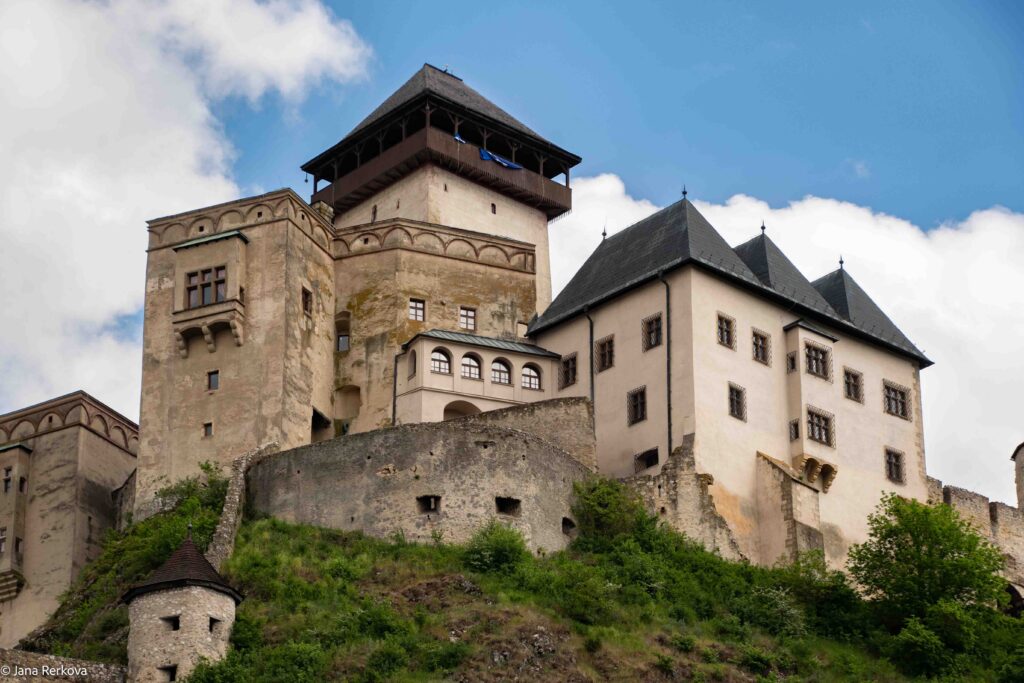
The answer? Almost all of them.
The country’s main rail route connects Slovakia’s largest cities, including Bratislava, Trenčín, Žilina, Poprad-Tatry and Košice. This route alone provides access to some of Slovakia’s most famous attractions, including Trenčín Castle, UNESCO-listed Vlkolínec, the Low Tatras, Bešeňová Aquapark, Demänovská Cave of Liberty, the High Tatras and the historic centre of Košice.
From these larger transport hubs, local and regional trains open up opportunities to visit former mining towns including Kremnica and Banská Bystrica, impressive castles such as Orava Castle, Ľubovňa Castle and Bojnice Castle. Some even take you to the heart of national parks to see rare caves like Dobšinská Ice Cave in Slovenský raj, or discover the medieval streets of UNESCO-listed Bardejov.
The places that sit beyond the railway network, such as the medieval town of Banská Štiavnica, Levoča, Spiš Castle, parts of Slovenský raj National Park, Bachledka Treetop Walk and many open-air museums, can all be reached using a local bus connection. What’s even better, more often than not, these buses wind through valleys and mountains, providing spectacular and often slightly dramatic views.
How Easy Is Travelling Across Slovakia by Public Transport?
Travelling by train and bus in Slovakia is easier than you might think.
Routes can be searched online, tickets can usually be bought in advance, train announcements are increasingly available in English, and many buses display upcoming stops on screen.
If you’re worried about not speaking Slovak, don’t be. Even in smaller towns and villages, it’s much easier to navigate the system than it used to be. You might occasionally need to use a translating app, but probably not as often as you might think.
What You’ll Need
- CP.sk app
- Ideme Vlakom (ZSSK) app
- RegioJet app
- A contactless bank card
- Google Translate or equivalent (just in case)
Travelling by Train
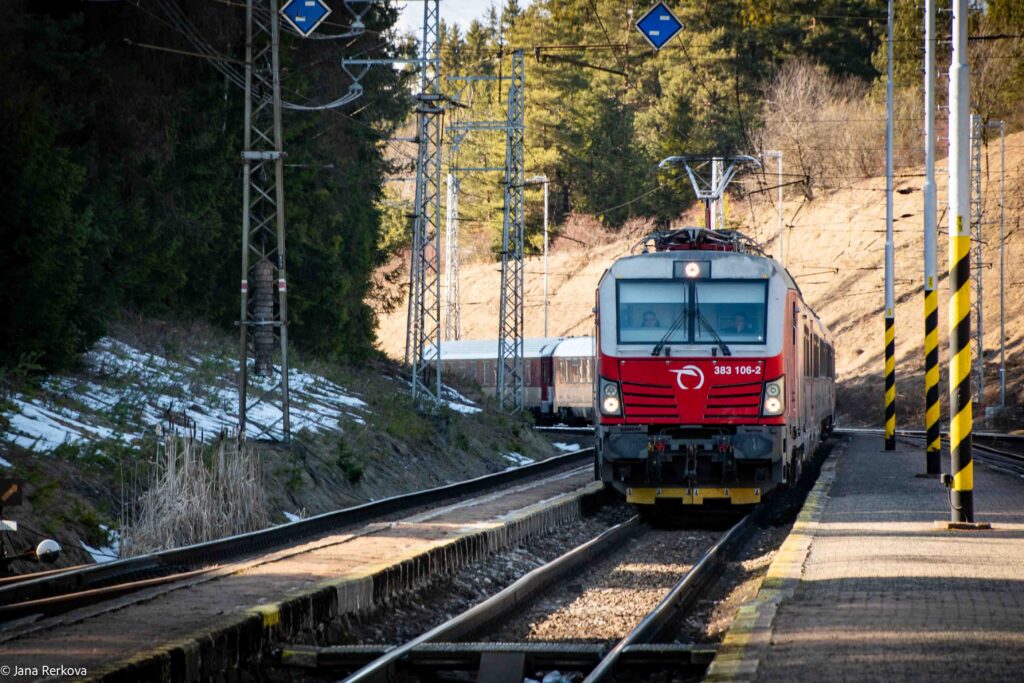
There are three main train operators in Slovakia: ZSSK (Slovak Railways), RegioJet and Leo Express.
In reality, you’ll probably use Slovak Railways (ZSSK) most of the time because it covers the vast majority of the rail network. It runs frequent services between Bratislava and Košice and is the only operator that serves the entire route. If you’re travelling to smaller towns and cities across Slovakia, chances are you’ll be travelling with ZSSK.
RegioJet and Leo Express also operate on Slovakia’s busiest rail corridor. However, both continue north from Žilina into the Czech Republic rather than serving Bratislava. They also operate far fewer services each day than Slovak Railways.
Classes & Comfort
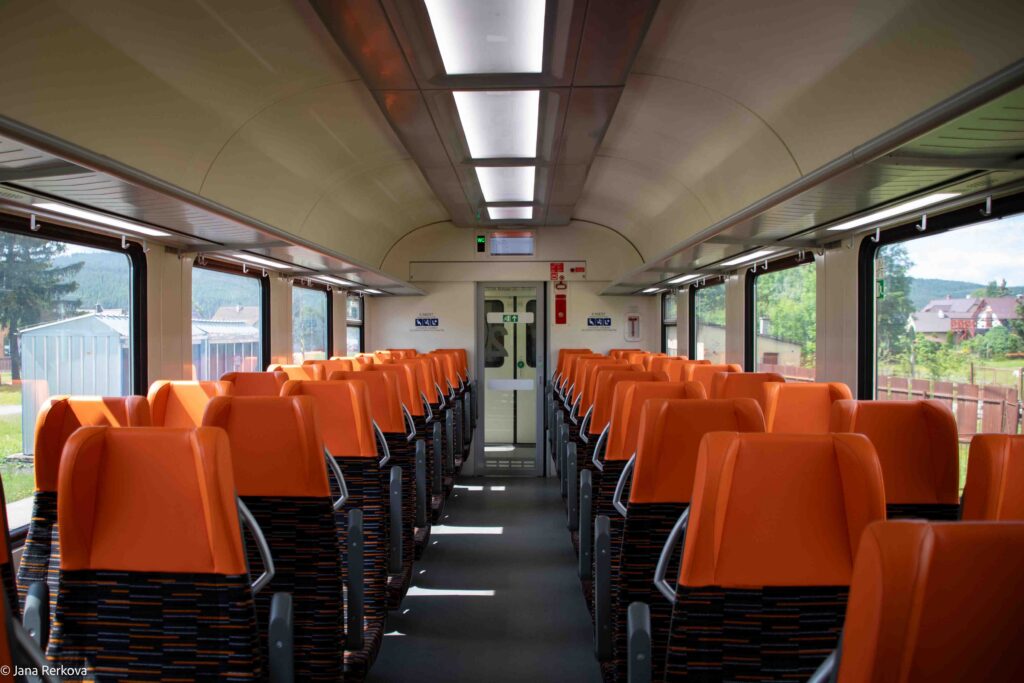
All three operators offer comfortable trains, free Wi-Fi and power sockets on most long-distance services.
- You’ll usually have a choice between 2nd Class, 1st Class and sometimes Business Class.
- Most travellers are perfectly happy in 2nd Class, which is comfortable and affordable. However, if you prefer a quieter journey with more space, 1st Class or Business Class are often worth the small additional cost.
- On many services, seat reservations are included automatically in 1st and Business Class tickets.
- When travelling in 2nd Class, I’d recommend reserving a seat whenever possible, especially when travelling longer distances. Trains can become very busy during peak travel times, public holidays and summer weekends, and having a reserved seat removes any uncertainty from the journey.
- Families travelling with children can take advantage of dedicated family compartments (detské kupé) available on many RegioJet and Slovak Railways services.
Food & Drink
Most long-distance services offer refreshments on board, either complimentary or paid for.
- Slovak Railways (ZSSK) provides a complimentary bottle of water in 1st Class, with snacks and drinks available for purchase in other classes. Express and InterCity services also include a restaurant carriage.
- RegioJet offers complimentary coffee in all classes and includes additional drinks such as juice or Prosecco in Business Class. Snacks and refreshments are also available for purchase.
- Leo Express offers complimentary coffee in all classes refreshments as well. Snacks and refreshments are also available for purchase.
Which One Is Cheapest?
Slovak Railways generally uses fixed pricing, whereas RegioJet and Leo Express use demand-based pricing.
- If you’re booking on the day of travel, RegioJet is often the cheapest option, followed by Slovak Railways, with Leo Express usually being the most expensive.
- If you’re booking in advance, RegioJet generally offers the best value, although Leo Express can occasionally be competitive on some routes.
My preference?
I usually travel with Slovak Railways (ZSSK). Not because it’s the cheapest or the most luxurious, but because it offers the greatest flexibility. Services on the Bratislava–Košice route run frequently throughout the day, which means that if I miss a train, decide to stay somewhere longer, or a service is cancelled, there’s usually another train departing within an hour or so.
That’s often not the case with RegioJet and Leo Express, which operate far fewer services each day. While they can be cheaper and offer excellent onboard service, missing one of their trains can mean waiting hours for the next departure.
Travelling by Bus
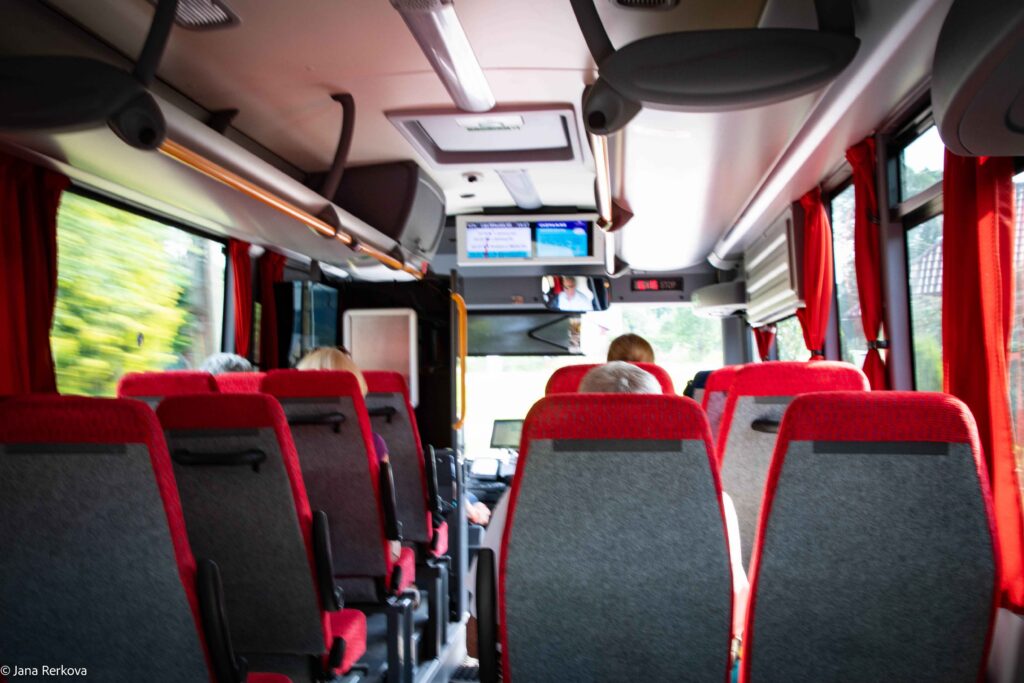
Not everything in Slovakia is connected by rail.
Many of the country’s best attractions — caves, castles, mountain resorts, national parks and small historic towns — require a bus connection for the final part of the journey. The good news is that train and bus connections are often surprisingly well coordinated.
Slovakia has a mixture of long-distance and regional bus operators serving different parts of the country. For international routes, airport transfers and longer journeys, you’ll often come across companies such as Slovak Lines, FlixBus and RegioJet. Of the three, RegioJet is often the cheapest, particularly when booked in advance. Slovak Lines can also be significantly cheaper if you book ahead rather than buying a ticket on the day of travel.
Regional buses are what you’ll use most often when travelling to smaller towns, villages and attractions. They are generally reliable and affordable, although services can be less frequent in remote areas, particularly at weekends and outside peak travel times. If you’re travelling to a more isolated destination, it’s always worth checking the return journey before you set off.
Planning Your Journey
When it comes to planning journeys, the only tool you really need is CP.sk. Think of it as Slovakia’s public transport bible.
It combines trains and buses from different operators into a single journey planner, saving you from having to work out which company runs which route. Simply enter your starting point and destination, and it will show you the available connections, including transfers.
The app also allows you to purchase some tickets, but the booking functionality is quite limited, particularly when it comes to choosing seats. I usually use CP.sk to search for connections and then book directly with the relevant operator. This approach gives me more control over ticket types and seat selection.
Buying Tickets
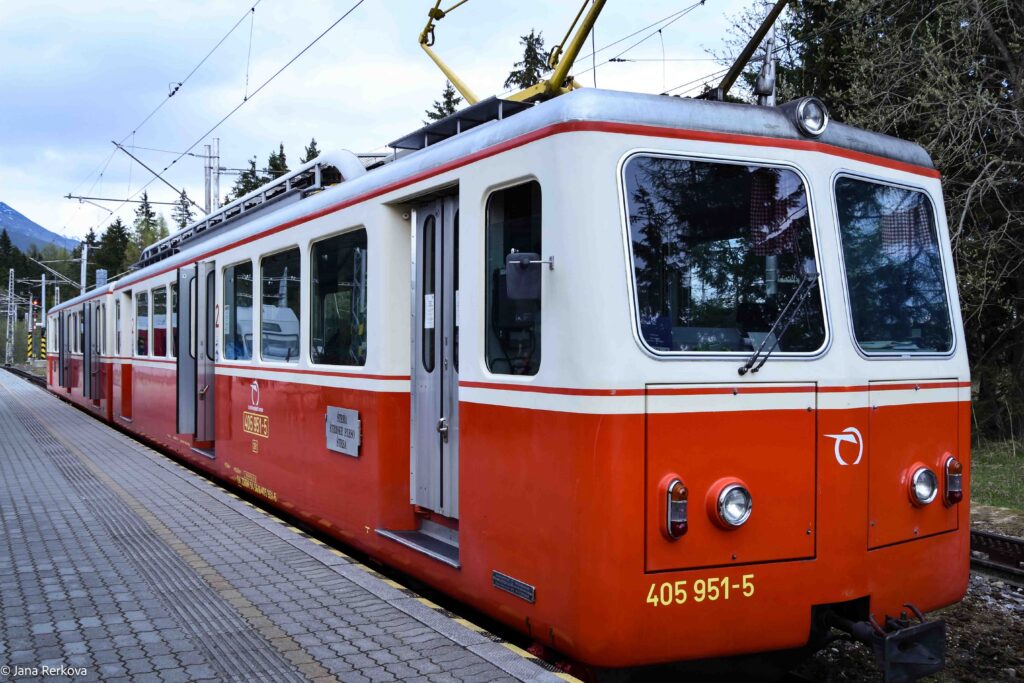
Trains
When it comes to trains, booking online is often the easiest option and can save you money. Not all stations have ticket offices anymore, particularly in smaller towns, so using an app is often the most convenient way to buy tickets.
- Slovak Railways (ZSSK) tickets can be purchased through the Ideme Vlakom app.
- RegioJet and Leo Express tickets can be purchased through their respective apps.
- Most regional train services can also be booked through Ideme Vlakom, while tickets for the Bratislava–Komárno line can be purchased through Leo Express.
Buses
When it comes to buses, the process is similar.
- Slovak Lines, RegioJet, Leo Express and FlixBus tickets can be purchased through their apps.
- For regional and local buses, you can buy your ticket directly from the driver when boarding. Cash is accepted almost everywhere, and many operators now accept contactless card payments as well.
Public Transport in larger cities
In larger cities, such as Bratislava, public transport tickets can often be purchased simply by tapping a contactless payment card, making travel quick and convenient without needing to buy a paper ticket in advance.
Can You Get Away Without a Valid Ticket?
I wouldn’t recommend it.
Train conductors routinely check tickets, even on short journeys. On most regional and long-distance buses, passengers board through the front door and either buy or show a ticket before taking a seat.
In cities such as Bratislava, ticket inspectors regularly carry out spot checks and fines can be substantial.
Must-Have Travel Apps
Must-Have Travel Apps
- CP.sk – Journey planner on iphone and on android
- Ideme Vlakom (ZSSK) – Buy train tickets on iphone and on android
- RegioJet – Get train and bus tickets on iphone and on android
- Bolt – Book a taxi on iphone and on android
Optional Apps
- Leo Express – Get train and bus tickets on iphone and on android
- Slovak Lines – Buy long-distance and airport buses on iphone and on android
- FlixBus – Get international and long-distance buses on iphone and on android
Common Mistakes Visitors Make
- Assuming Every Station Has Step-Free Access. Many stations and trains still involve stairs. If accessibility is important, check in advance and arrange assistance where available.
- Leaving Luggage Until the Last Minute. Not all stations have luggage lockers, particularly smaller ones.
- Booking Tickets Too Late. Around Christmas, Easter and major public holidays, trains can sell out. If you’re travelling during busy periods, book early.
- Not Bringing the Right Power Adapter. While most long-distance trains have power sockets, not all services offer USB charging ports. If you’re using your phone for tickets, maps and journey planning, make sure you pack the right adapter and charge your devices whenever you get the chance. Slovakia uses European-style plugs, which are different from those used in countries such as the UK and the United States.
- Relying on the Restaurant Carriage. Restaurant cars are great when they’re operating. Occasionally they’re not. Bring snacks, especially on longer journeys.
- Forgetting to Check the Return Journey. This is particularly important when visiting caves, castles and national parks. Some rural bus routes have limited services, especially at weekends.
- Leaving Too Little Time for Connections. Delays happen. If you’re connecting to a flight or travelling internationally, build some buffer time into your itinerary.
- Leaving Valuables Unattended. Slovakia is generally very safe, but common sense still applies. Don’t leave laptops, cameras or passports unattended while you pop to the toilet.
- Assuming Every Attraction Is Next to a Train Station. Many are not. Sometimes you’ll need a short bus journey, local taxi or a walk from the station.
- Assuming Attractions Are Open Every Day. Many museums, castles, caves and galleries in Slovakia are closed on Mondays. Always check opening times before travelling, particularly if you’re making a special trip.
Amazing Places in Slovakia You Can Reach by Public Transport
Here are some of my favourite places in Slovakia that you can visit by public transport. I’ve already written detailed guides for many of them, and I’ll be adding more as I continue exploring the country.
- BRATISLAVA – Slovakia’s vibrant capital, packed with history, cafés and riverside walks.
- KOŠICE – Slovakia’s second-largest city is one of the easiest destinations to reach by train and makes an excellent base for eastern Slovakia.→ Read my guide to Košice, Slovakia
- HIGH TATRAS NATIONAL PARK – Slovakia’s spectacular mountain range, with lakes, hiking trails and cable cars.
- BANSKÁ ŠTIAVNICA – A UNESCO-listed mining town full of colourful streets, fascinating history and beautiful surrounding countryside. → Read my guide to Banská Štiavnica, Slovakia
- KREMNICA – A charming medieval mining town famous for its mint, historic centre and surrounding mountains. → Read my guide to Kremnica, Slovakia
- DEMÄNOVSKÁ CAVE OF LIBERTY – One of Slovakia’s most spectacular karst caves, easily reached by bus from Liptovský Mikuláš.→ Read my guide to Demänovská Cave of Liberty, Slovakia
- OPEN-AIR MUSEUM OF ORRAVA VILLAGE IN ZUBEREC – One of Slovakia’s finest open-air museums, showcasing traditional life in the Orava region.
- ORAVA CASTLE – One of Slovakia’s most spectacular castles, dramatically perched on a rocky cliff above the Orava River
- SLOVENSKÝ RAJ NATIONAL PARK – Famous for its ladders, gorges, waterfalls and unforgettable hiking trails.
- LEVOČA – One of Slovakia’s most beautiful medieval towns, home to the world’s tallest wooden Gothic altar. → Read my guide to Levoča, Slovakia
- BARDEJOV – A beautifully preserved UNESCO medieval town with colourful burgher houses and one of Slovakia’s prettiest squares. → Read my guide to Bardejov, Slovakia
- TRENČÍN – European Capital of Culture 2026, dominated by one of Slovakia’s finest castles.
Frequently Asked Questions
Is public transport cheap in Slovakia?
Yes, public transport in Slovakia is very affordable, especially compared to Western Europe. Regional train tickets between major cities usually cost under €20, and local bus journeys cost roughtly €1 and €5, depending on the distance.
Can you buy Slovakia train tickets online?
Yes, you can easily buy train tickets online. For Slovak Railways (ZSSK – Železničná spoločnosť Slovensko), use the Ideme Vlakom website or mobile app. RegioJet and Leo Express also have their own websites and mobile apps. Booking online is cheaper, and also lets you reserve your seat in advance.
What is the best public transport app for Slovakia?
The best app to plan routes in Slovakia is CP.sk. It combines train and bus connections from different operators into a single app, making it easy to plan journeys anywhere in the country. It also tracks both train schedules and bus connections across the country in real-time.
Do trains sell out in Slovakia?
Regular regional trains rarely sell out, but high-speed InterCity (IC) trains sometimes do. If you are traveling around major holidays like Christmas or Easter, or taking the popular Bratislava-Košice line on a Friday afternoon, you should book your ticket several days in advance.
Are trains or buses better in Slovakia?
Trains are better for moving between major cities, while buses are essential for smaller towns. Major destinations are connected by fast rail lines, but to reach historic towns hidden in the mountains (like Banská Štiavnica or regional nature spots), regional buses are often the most direct choice.
Is Travelling by Public Transport in Slovakia Worth It?
After years of travelling around Slovakia by train and bus, I genuinely don’t think a car is necessary for most visitors. If you’re willing to combine trains with the occasional local bus — and sometimes add a short walk — Slovakia becomes an easy country to explore independently.
Will some journeys take a little longer? Sometimes, especially when they involve local train or bus connections.
Will your trip be cheaper? Almost certainly, particularly if you’re travelling solo or as a couple.
Will the adventure be less exciting? Definitely not.
If anything, travelling by train and bus often makes the journey more memorable. You’ll travel alongside locals, wait for connections in places most tourists never see, and almost certainly discover things you would have missed had you been driving or travelling on an organised tour.
In Slovakia, travelling by public transport isn’t a compromise. Often, it’s part of the adventure.

An Engaging Blog Post