When it comes to Central European city breaks, places like Prague, Vienna and Budapest usually steal the spotlight. But if you’re looking for a destination that’s less touristy, yet rich in history and culture, with thriving food and bar scene and plenty of opportunities for outdoor adventures, look no further than Bratislava. The city is packed with things to do, it’s safe, affordable and easy to explore independently.
Whether you have a single day or a long weekend, this guide brings together 15 of the best things to do in Bratislava, based on my own experiences and local knowledge. From tried-and-tested attractions to personal recommendations and practical tips, it’s designed to help you get the most out of your visit.
Affiliate Disclosure: This post contains affiliate links. If you make a purchase through them, I may earn a small commission at no additional cost to you. Thank you for supporting Rucksack & Road.
My Top 5 Experiences in Bratislava
1. Stroll through Bratislava’s charming Old Town
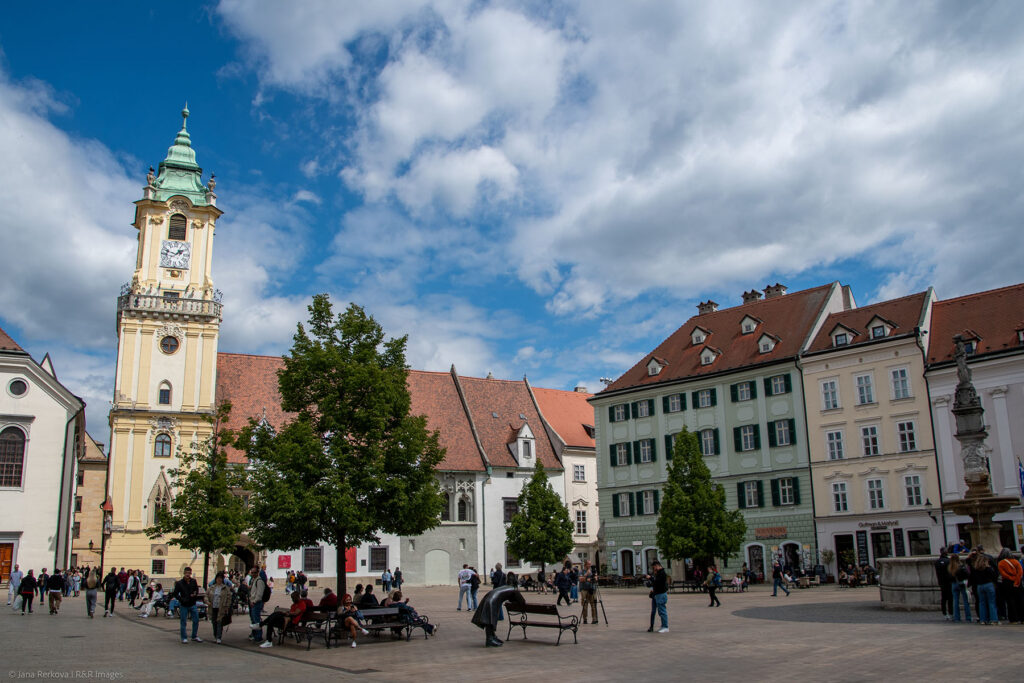
You might be tempted to head straight up to Bratislava Castle or the UFO Observation Deck as soon as you arrive, but starting with an easy stroll through the streets of Bratislava’s Old Town is one of the best ways to begin your visit.
The Old Town is small, and most of its main sights – Michael’s Gate, the Old Town Hall, Primate’s Palace and St Martin’s Cathedral – are within easy walking distance of each other. What I love most about this part of Bratislava are its historic squares. Three are definitely worth exploring: Main square, home to the Old Town Hall; Primate’s Square with its beautiful pink palace; and Hviezdoslav’s square, a tree-lined promenade stretching from the historic Slovak National Theatre almost all the way to the Danube.
There are plenty of cafés, restaurants and pubs dotted around the Old Town if you want to take a break from sightseeing and simply watch the world go by. One of my favourite things to do whenever I visit a new city.
2. For incredible 360-degree views of Bratislava, head to the UFO
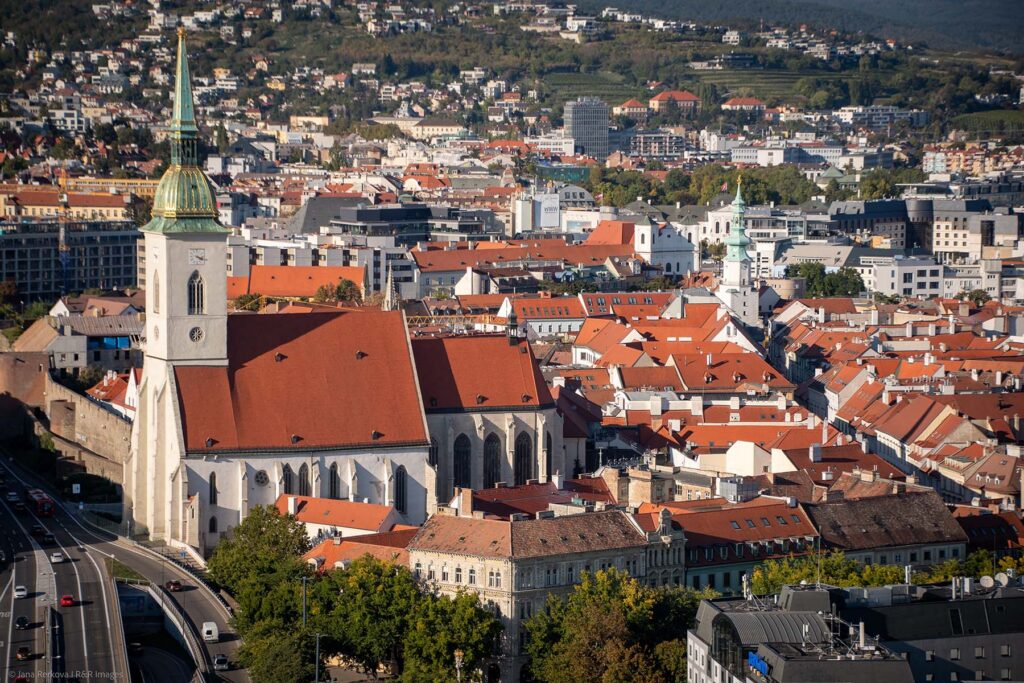
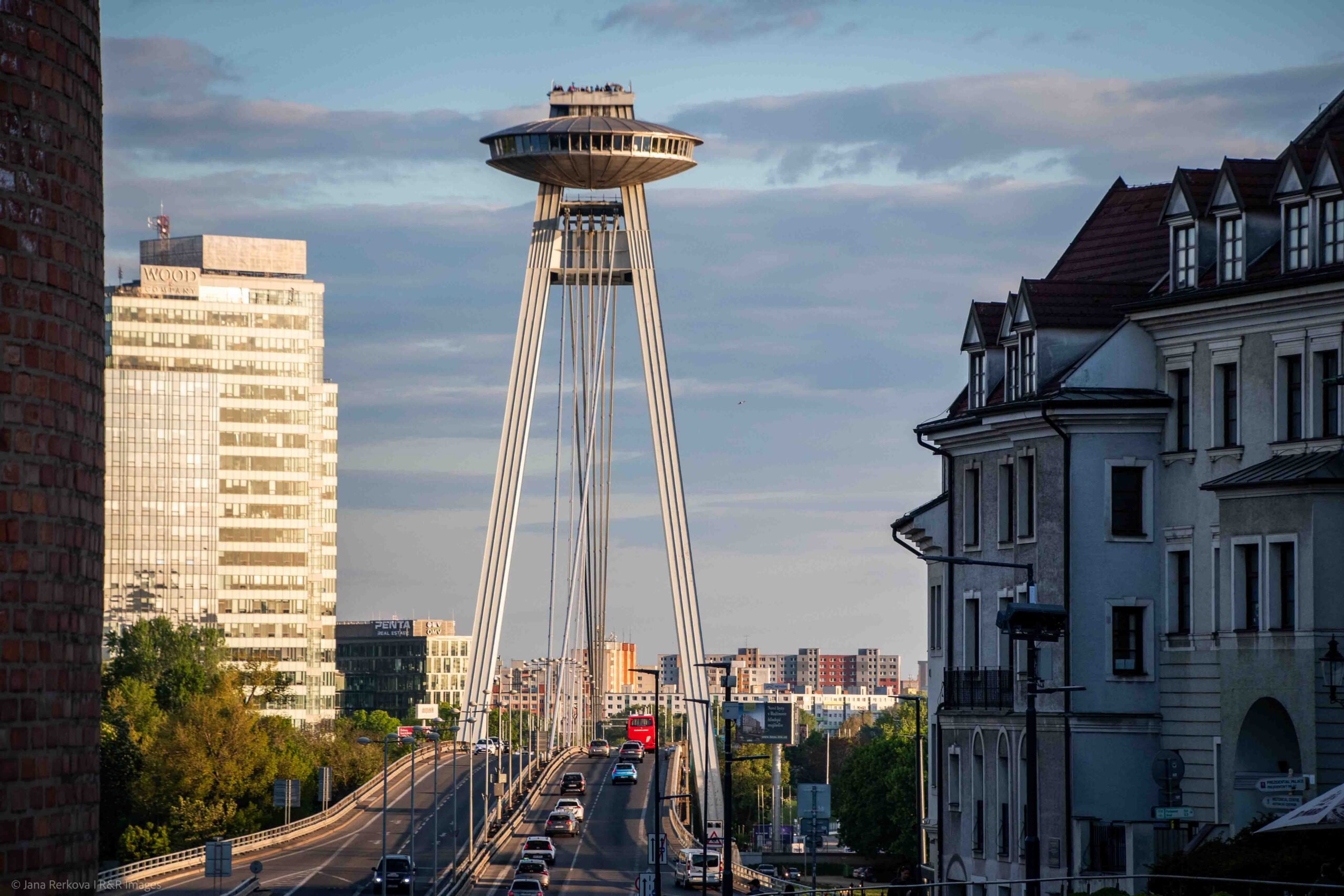
Getting to the top of the UFO is probably one of the coolest things you can do in Bratislava. Although, if you’re anything like me and aren’t particularly fond of heights or lifts, you might need to talk yourself into it first. But if you can brave it, you will be rewarded with some of the best 360-degree views of Bratislava.
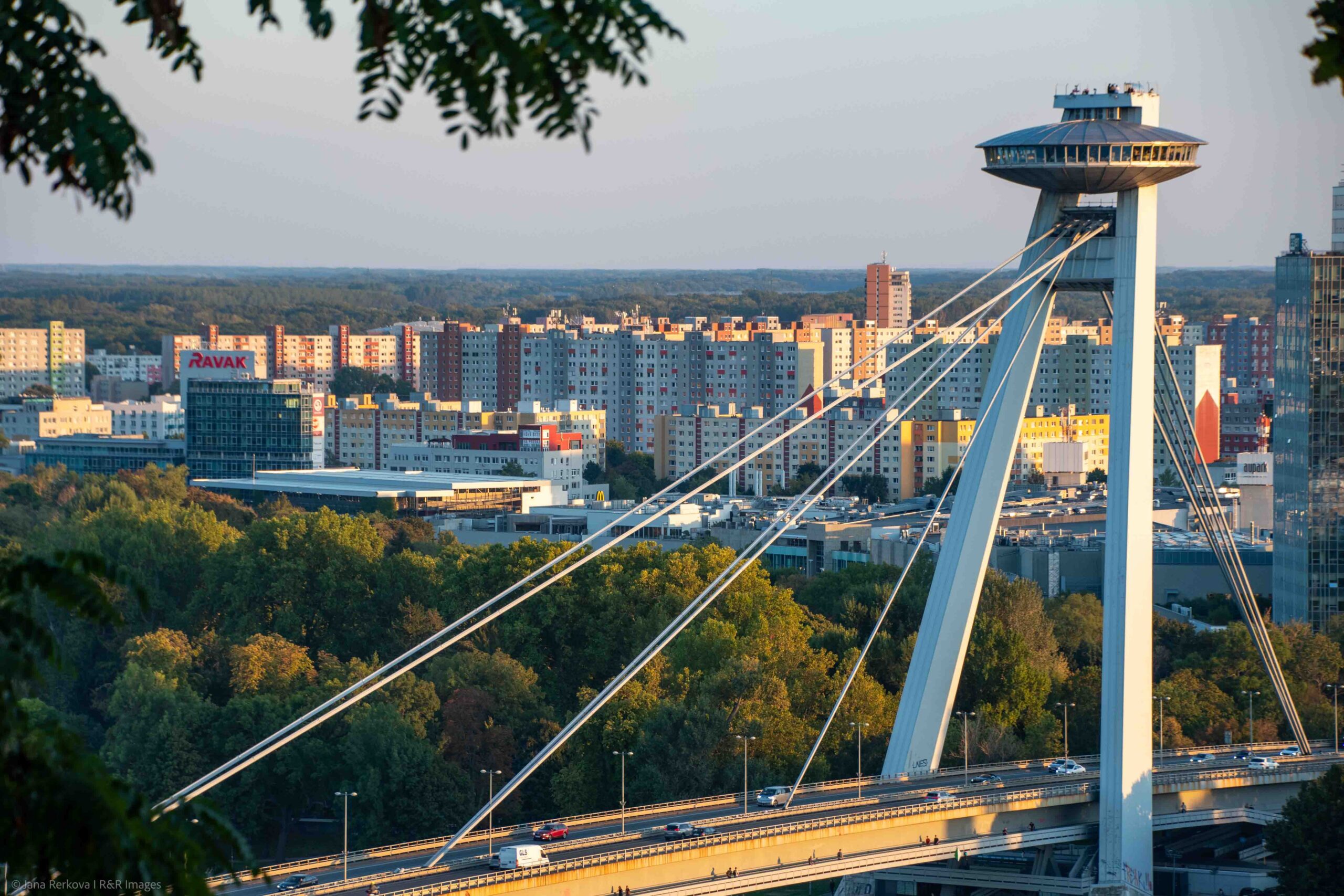
North of the river, you’ll see Bratislava Castle in all its glory, St Martin’s Cathedral sitting ridiculously close to the road, and the Old Town, where the buildings are so tightly packed together you’d think there were no street between them. To the south is Petržalka, with its seemingly endless blocks of flats. This is Bratislava’s largest borough and one of the largest housing estates in Central Europe. When you spot the wind turbines in the distance, you’re looking towards Austria. From here, you can also see the scale of the motorway running across that single-pylon bridge. I’m no engineer, but that seemed pretty extraordinary to me.
The futuristic SNP Bridge was built between 1967 and 1972 to connect the Old Town with Petržalka. And although it took a while for the bridge to be recognised as an architectural icon, today it’s a National Cultural Monument and even has a place the World Federation of Great Towers list.
The structure might not be everyone’s cup of tea, but I love it. And the views really are amazing.
Want to know more about my visit to the UFO? Read my blog post: Is visiting the UFO Bratislava’s coolest experience?
Planning a visit? The UFO Observation Deck is generally open daily from 10:00 to 23:00, with adult tickets costing around €12.50. Check the official UFO website for opening hours, current prices and tickets.
3. See the remarkable restoration of Bratislava Castle
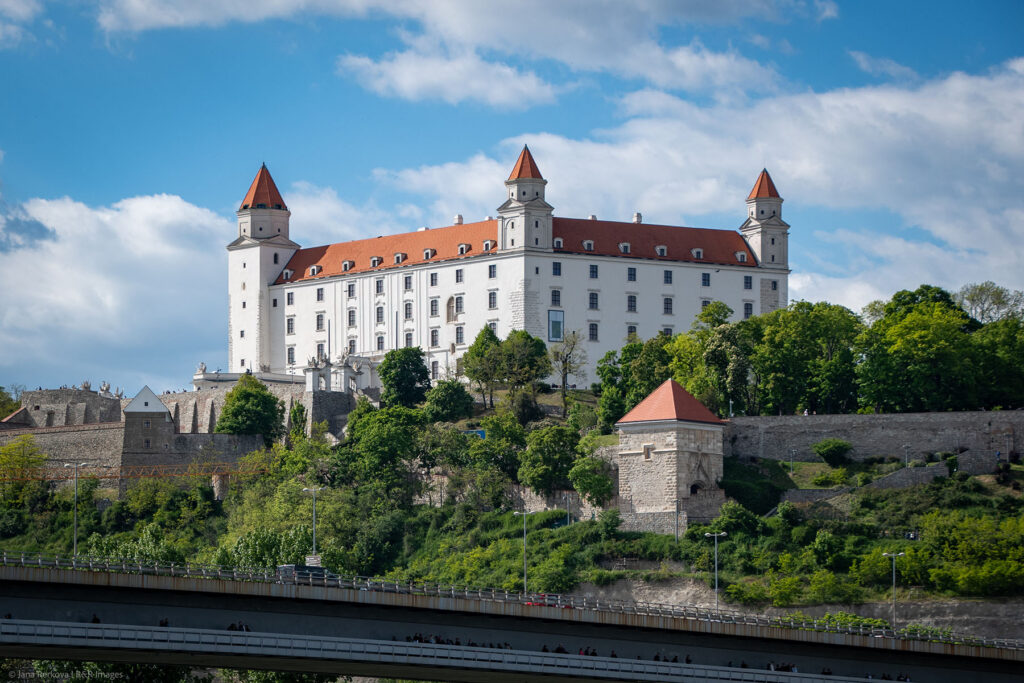
You don’t have to go inside Bratislava Castle to enjoy a visit. In fact, some of my favourite things about this place are completely free: the castle grounds, the Baroque garden and those incredible views over the Danube, especially just before sunset.
Looking at the castle today, you’d probably never guess that it was still a ruin in the early 1950s, and that its demolition was even considered. So, what you’re seeing isn’t a perfectly preserved medieval castle, but an extraordinary 20th-century restoration of a centuries-old building devastated by fire in 1811.
Inside, the restored Baroque staircase, with marble, gold-gilded decorations and ornate mirrors, is especially striking. Although some of the rooms contain period furniture, don’t expect a fully furnished royal residence showing exactly how the castle looked in the past. What you’re coming here to admire isn’t just the castle’s incredible restoration, but also the exhibitions exploring Slovakia’s history through archaeological finds, paintings, sculptures and other everyday objects. And if you decide to tour the castle, you’ll also have the opportunity to climb the Crown Tower for views over Bratislava and its surrounding area.
I did enjoy touring the interiors, but my favourite part of the castle is its grounds. Strolling around at sunset, admiring the views of the city, is probably one of the most memorable experiences I’ve had in Bratislava. From here, you’ll get some seriously good views across the Danube, and it’s one of the best places to photograph the UFO. The Baroque garden, recreated using original drawings and historical document from the times of Maria Theresa, is also beautiful.
For an unforgettable experience, why not come in the afternoon, spend about an hour touring the castle and stay for sunset? Then head to one of the vinotékas just below the castle for a glass of good regional wine. Or something from further afield, if you prefer.
Planning a visit? The castle grounds and Baroque garden are free to explore, but you’ll need a ticket to visit the interiors. Check the official Museum website for up-to-date admission prices and opening hours.
4. Discover one of Bratislava’s most extraordinary places: Danubiana
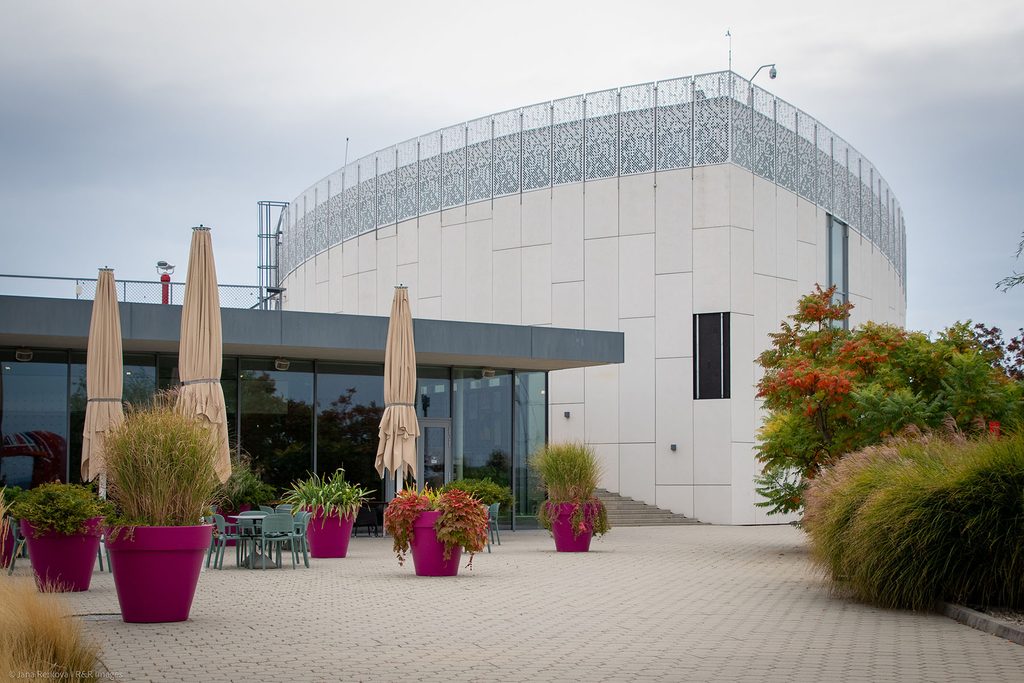
If you want to see a place that’s unlike anything else in Bratislava, head to Danubiana, a modern art museum on a small peninsula in the Danube. It might not be within walking distance, and modern art might not be your thing, but if you’re willing to look past both, you’ll find a place that’s quiet, calm and a wonderful escape from the bustle of the city.
Danubiana isn’t just a museum where you come to look at a few paintings and leave. The whole peninsula is part of the experience. There’s art to admire, a park to stroll through, a river to sit beside and coffee to enjoy, all an incredibly peaceful setting.
There’s the original museum building, a beautiful gallery shaped like a ship sitting in shallow water, and its modern extension, with floor-to-ceiling windows overlooking the river. Then there’s the sculpture park, with around 60 works by Slovak and international artists dotted throughout the grounds, surrounded by greenery, trees, flowers and winding paths. I was in awe of it all. And if that wasn’t enough, Danubiana has another surprise up its sleeve: a rooftop garden with more art and views across the Danube. There’s also an Art Café where you can sit and enjoy the scenery through the windows, just in case the weather isn’t that great.
Danubiana is a 30-minute bus ride from central Bratislava, with buses running roughly once an hour. There’s quite a bit to explore here, so give yourself at least two hours. With the journey there and back, it’s easily a half-day trip from Bratislava. And, an unforgettable one, even if modern art isn’t your thing.
Want to know more? Read about things to see and do at Danubiana, along with practical tips for planning your visit, in my blog post Danubiana: Bratislava’s extraordinary museum on the Danube.
5. Don’t miss the extraordinary 17th-century tapestries at Primate’s Palace
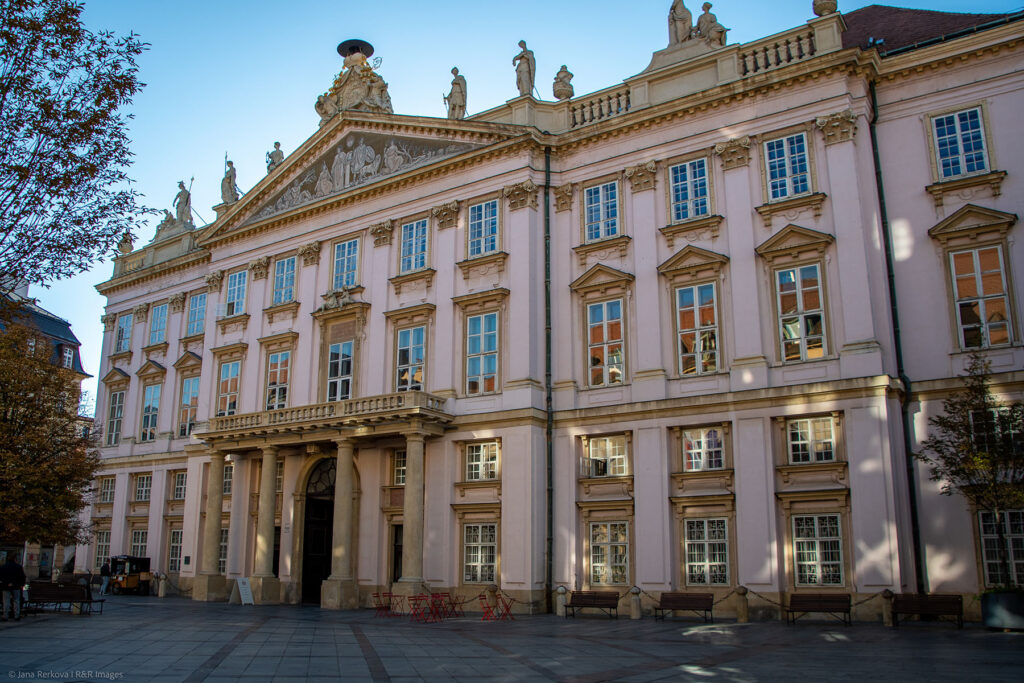
Rounding off up my top 5 experiences in Bratislava is Primate’s Palace. This beautiful pink building is one of Slovakia’s finest examples of Neoclassical architecture. So perhaps that’s why there are benches in the square outside, so you can sit down and admire it for a while.
I’ve seen plenty of people stop to admire it, take a photograph or two, and some even wonder into the courtyard. But only a few seem to go in. So, don’t let its pink façade fool you, because it’s inside where you’ll find its real treasures.
Primate’s Palace has been the seat of Bratislava’s Mayor since 1903, and it’s also famously known as the place where the Treaty of Pressburg was signed in 1805, following Napoleon’s victory at the Battle of Austerlitz.
The first floor, including the famous Hall of Mirrors, is open to the public. And while the hall is impressive, it’s the state rooms, or salons, as they’re called, that, in my opinion, really steal the show. Each has its own colour scheme and is beautifully restored and furnished with period furniture. But the real treasures here are the rare 17th-century tapestries, made in the royal weaving workshop in England. There are six of them, almost floor-to-ceiling in height, telling the tragic love story of Hero and Leander. If you’re not familiar with the story, don’t worry, the audio guide gives you a brief summary. So, don’t forget to bring headphones.
If the pink façade or the history doesn’t convince you to go in, those rare tapestries should. For me, the best €5 I spent in Bratislava. Don’t forget to bring headphones so you can listen to the audio guide.
Planning a visit? Admission to Primate’s Palace costs €5 for adults, and the audio guide is included. For up-to-date opening hours and ticket prices, check the official Primate’s Palace website.
The Rest of the Best in Bratislava
6. Take a peek into Bratislava’s unique Art Nouveau Blue Church
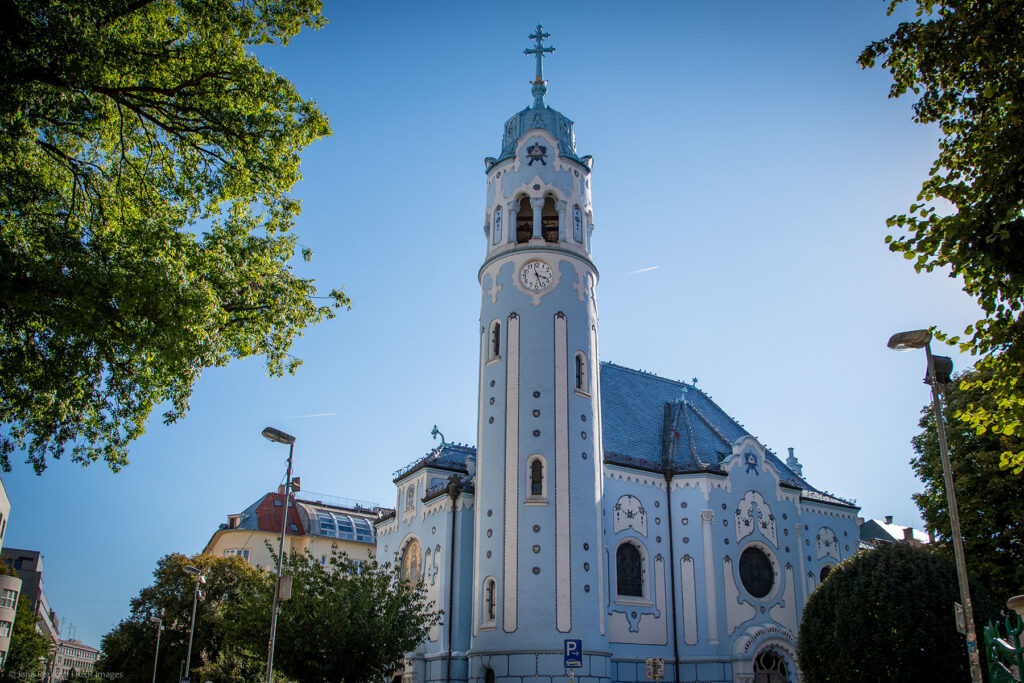
To see the Blue Church, you’ll need to take a short detour from the Old Town. The church is tucked away in a quiet residential neighbourhood, and the great thing about walking there from the historic centre is that you’ll pass through streets you might otherwise never explore.
The Church of St Elizabeth, as it’s officially known, was designed by Hungarian architect Ödön Lechner in the Hungarian Secession style and built between 1909-1913. It’s one of Bratislava’s most beautiful Art Nouveau buildings, and one of its most photographed and beloved sights. It’s the fairytale architecture, blue exterior and equally striking interior that attract so many visitors here. And I wouldn’t miss it for the world either.
It’s nicknamed the ‘Blue Church’ because almost everything about it is blue: the facade, decorative details and glazed roof tiles. Even much of the interior is blue, complemented by gold, floral motifs, paintings, marble statues and a beautifully decorated main altar. It might just be one of the most beautiful little churches in Slovakia.
If you want to go inside, you’ll usually need to attend a service, although tours accompanied by music sometimes run during the summer. But to see the interior, you can simply peek through the main entrance, which is usually open for viewing. Although a metal gate prevents you from entering, you can still see much of the interior through it. You can even take photographs.
And, one last thing. If you’re planning to visit Brussels, look out for the Mini-Europe park. You’ll find a miniature replica of Bratislava’s Blue Church there.
7. Escape the city bustle in the gardens of Grassalkovich Palace
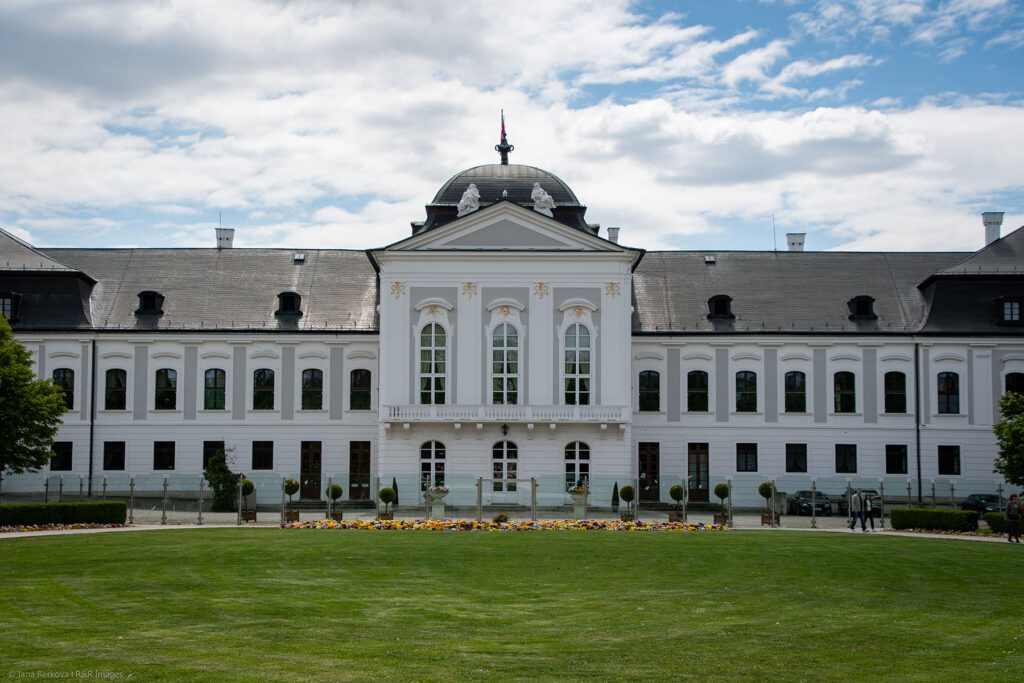
I wasn’t expecting to find such a peaceful garden right in the middle of one of Bratislava’s busiest areas, but that’s exactly what’s behind Grassalkovich Palace, the official residence of the president of Slovakia.
You’ll find the stunning 18th-century Rococo palace and its French-style Baroque garden on Hodžovo Square, somewhere between the main train station and the historic Old Town. What was once on the outskirts of Bratislava now sits in the middle of a busy traffic junction, surrounded by ordinary commercial buildings and a pedestrian underpass. It looks like something that belongs in Versailles rather than here.
But I guess things were quite different in the 18th century, when the palace was build outside the city walls as a summer residence for Count Anton Grassalkovich, one of the most powerful Hungarian nobleman and a close confidant of Maria Theresa. It became a perfect place for high-society events and social gatherings, and even Maria Theresa herself came here at some point.
The palace has been the official residence of Slovakia’s president since 1996 and generally isn’t open to public. But the Baroque garden behind it is, and it’s free to explore. On a beautiful summer day, with its trees, flowers, fountains and winding paths, it’s a perfect escape from the noise of the city. There are benches to sit on, a children’s playground and even an avenue of oak trees (Aleja Prezidentov) planted by presidents and monarchs during official visits to Slovakia between 1999 and 2003.
The Baroque garden isn’t the largest of green spaces in Bratislava, but it’s right in the middle of a busy city, and it would be a shame if you gave it a miss. And at night, when the palace’s façade is illuminated and the fountain in front lights up in shades of blue, pink and purple, it’s even more spectacular. Another reason to come back in the evening.
8. Visit Bratislava’s historic coronation cathedral
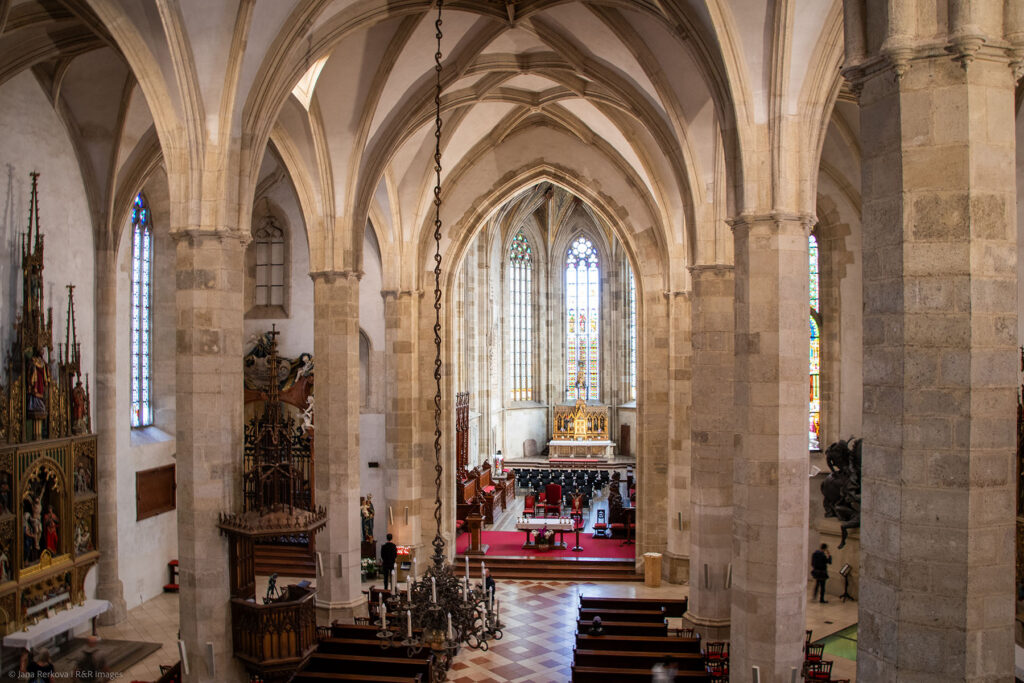
You probably didn’t realise, unless you really love history, that in Bratislava you can visit the very place where Maria Theresa was crowned Queen of Hungary in 1741. Yes, Bratislava was once a coronation city, and St Martin’s Cathedral was its coronation church. Ten Hungarian kings, one queen and seven royal consorts were crowned here between 1563 and 1830.
Much like Bratislava Castle, St Martin’s Cathedral, with its 85-metre-tall tower, is one of the most distinctive features of Bratislava’s skyline. The three-nave Gothic cathedral was built in the 14th century on the site of an earlier Romanesque church and consecrated in 1452. Its Gothic chapels were added between the 15th and18th centuries.
Inside, you’ll find striking stained-glass windows, historic altars, sculptures, as well as a treasury and crypts. And because the cathedral was built directly over an ancient cemetery, there’s something quite unusual near the altar: a glass viewing panel in the floor through which you can see human remains preserved beneath it.
Entry to the cathedral is free, and if you visit outside regular services, you can walk around, admire the artwork, take photos or simply sit down for a quiet moment of reflection before moving on. And if you want to see more, you can pay €5 to visit the organ loft, treasury and historic crypts beneath the cathedral. The organ loft offers an elevated view across the cathedral floor, while the treasury contains fascinating religious artefacts, silver chalices and relics, many dating back centuries.
For me, the €5 was worth paying. I found the treasure especially interesting. The crypts, though, which contain the tombs of clergy and members of nobility, were a slightly eerie experience. I lasted a minute, maybe two. There was no one else around, and I was genuinely worried that someone might close the wooden door above the entrance while I was still underground. But if you enjoy visiting cemeteries, crypts and that sort of thing, you might find this part of the cathedral particularly interesting.
Planning a visit? Check the cathedral’s opening hours before you go, as access may be restricted during religious services. If you want to explore the organ loft, treasury and crypts, check the official website for-up-to date prices and opening hours.
9. Visit the Old Town Hall and climb to the tower
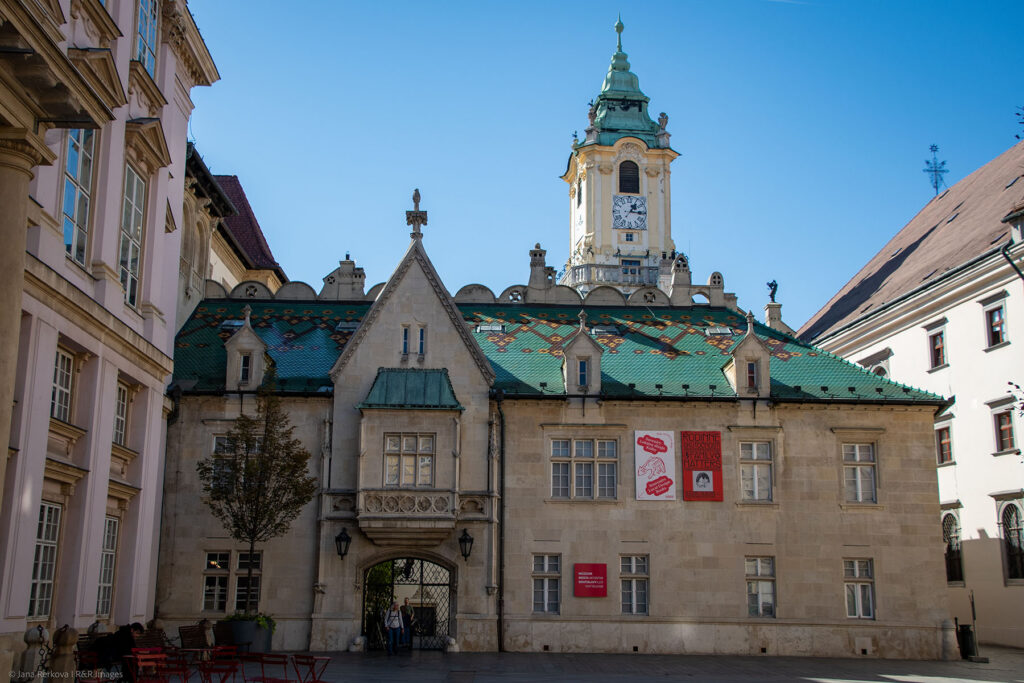
When you stroll through the Old Town, you’ll come across a number of fascinating buildings, but perhaps none is as intriguing as the Old Town Hall on the Main Square.
It’s not a single building, but rather a complex of buildings joined together over the centuries, and the result is an interesting mix of Gothic, Renaissance and Baroque architecture you see today. The building with the tower is the oldest part, dating back to the 13th century. So if you like views, it’s worth climbing to the tower for a different perspective of the Old Town. It’s not a particularly difficult climb, and the views especially over Main Square, are quite good.
The Old Town Hall has been home to the Bratislava City Museum since 1868, making it the oldest continuously operating museum in Slovakia. There is so much to explore inside that you can easily spend an unreasonable number of hours here. So, find an hour or two and pick a collection that interests you most.
The exhibition that really caught my eye was Family Matters, which explores the lives of ten prominent burgher families and their contributions to the city’s development in art, culture, business and public life. You’ll learn about their lives through stories, photographs, paintings and personal documents. You’ll discover the challenges they faced, which probably weren’t so different from those we experience today.
If you like history, this place is definitely worth exploring.
Planning a visit? Admission to Old Town Hall costs €8 for adults and also includes entry to the tower and Apponyi Palace. Check the official website for current opening hours and admission prices.
10. Enjoy a scenic walk along the Danube and through Sad Janka Kráľa
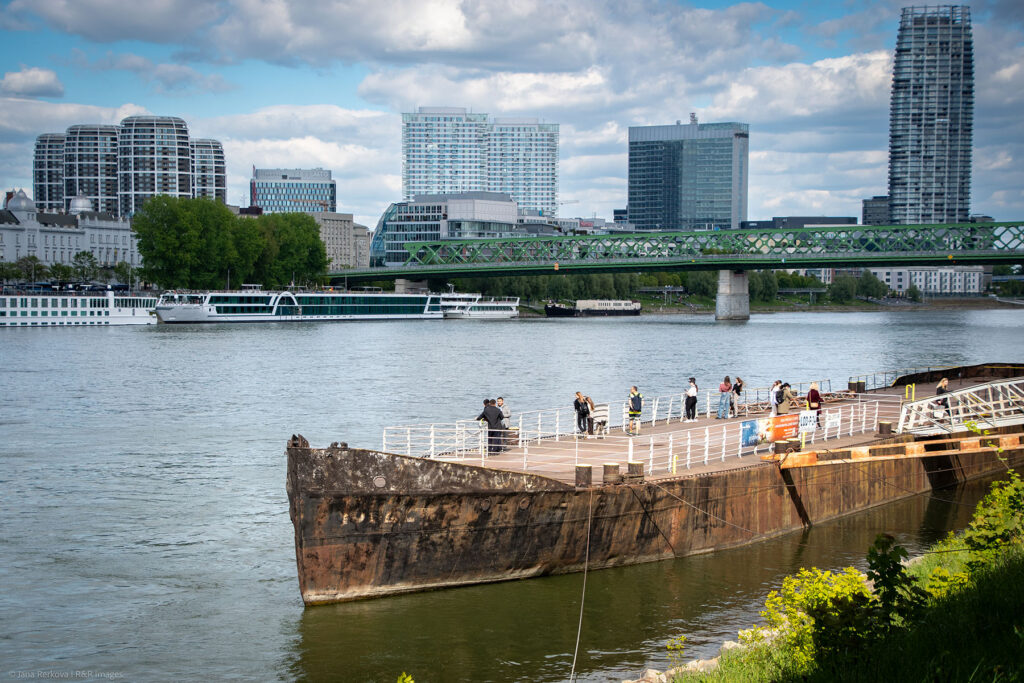
Although strolling through the Old Town is incredibly atmospheric, for something a little more relaxing and away from the crowds, head to the southern bank of the Danube. And even though you’ll be arriving in Petržalka, Bratislava’s largest borough, a walk along the river and through Sad Janka Kráľa can be surprisingly peaceful.
This is a great place to explore at all seasons. Spring brings beautiful blooming flowers, while hot summer days draw crowds to the nearby Tyršák beach and summer festivals and events. Autumn can be incredibly atmospheric, with trees changing colours and leaves falling. And on a beautiful sunny day, it’s one of the nicest times for a stroll along the river and through the park.
The scenic route to the park
Once you’ve finished exploring the Old Town, cross the Danube via Starý Most (the Old Bridge) with pedestrian and cycling paths along both sides. Watch out for cyclists, locals take their biking very seriously here! The views of the Old Town skyline and the UFO are incredible from here. And it’s generally much quieter than Most SNP (SNP bridge).
Once you’ve crossed the river, head into Sad Janka Kráľa, the oldest public park in Central Europe, and a peaceful escape from the touristy Old Town. There is a great variety of trees here, including ginkgo biloba and Chinese dawn redwood. But the most remarkable are the 200-year-old plane trees. You’ll also find some unusual architectural features here. One of the most interesting is the garden gazebo, originally the bell tower of a Franciscan church. There’s also a statue of the Slovak poet Janko Kráľ and distinctive semicircular seating areas decorated with zodiac symbols.
Once you’ve explored the park, head towards the Danube for a scenic riverbank walk with views across the Old Town. From here, you can see some of Bratislava’s most iconic sights, including the castle, the cathedral and the UFO, in all their glory.
This is also a great opportunity to visit the UFO Observation deck. The sunset views from the top are pretty amazing. Afterwards, you can simply walk across the SNP Bridge and back to the Old Town.
11. Visit Slavín, Bratislava’s monumental war memorial
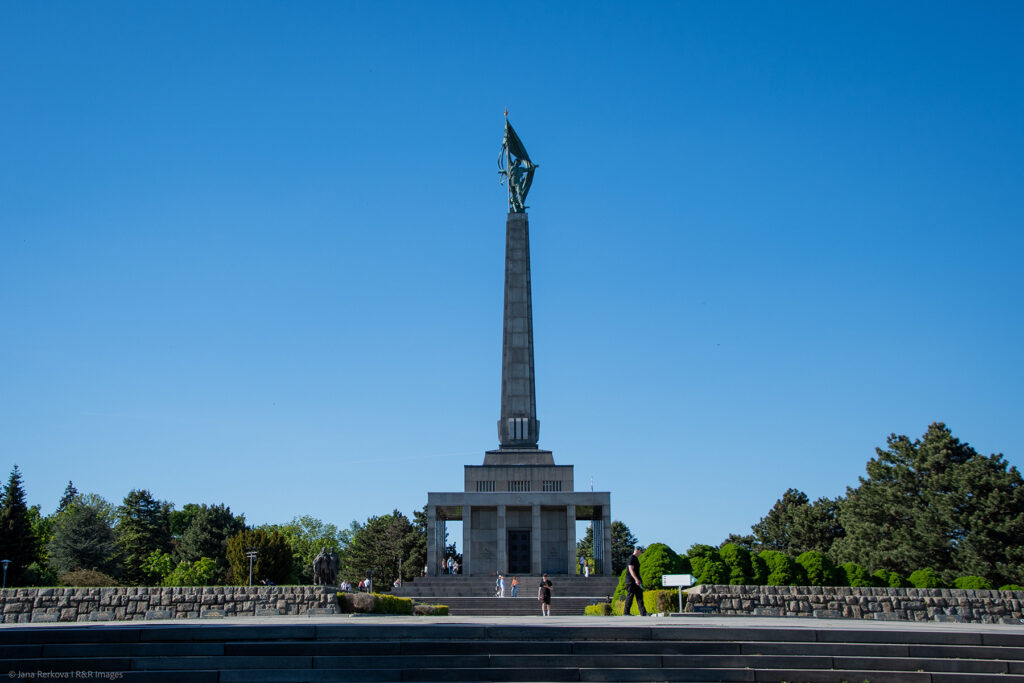
I’d wanted to visit Slavín ever since I first saw the larger-than-life statue towering above Bratislava. Not far any particular reason. Simply to see what it looked like up close.
Slavín is one of the most significant was memorials in Slovakia and one of the largest in Central Europe. It was built in the late 1950s to commemorate Soviet soldiers who died during the fighting for Bratislava and the surrounding regions in 1945. The cemetery contains six mass graves and 278 individual graves, with 6,845 Soviet soldiers buried here.
It’s hard not be me impressed by the sheer scale of this monument. The central obelisk rises more than 39 metres above the ground and is topped by an 11-metre-tall statue of a victorious Soviet soldier carrying a flag. And if you walk along its base, you’ll see the names of Slovak towns and cities liberated by the Red Army during its westward advance in 1944 and 1945. For me, places like Slavín provide an opportunity for reflection. On war, on the world we live in, on the lives lost and the people affected.
But there’s another reason to make the journey up here: the peaceful atmosphere and incredible panoramic views over Bratislava. And on your way back down towards the city centre, you’ll also walk through one of Bratislava’s most beautiful residential neighbourhoods, with a mix of grand villas from the Austro-Hungarian and interwar periods alongside much newer luxury homes.
12. Climb the tower of Bratislava’s only surviving medieval city gate
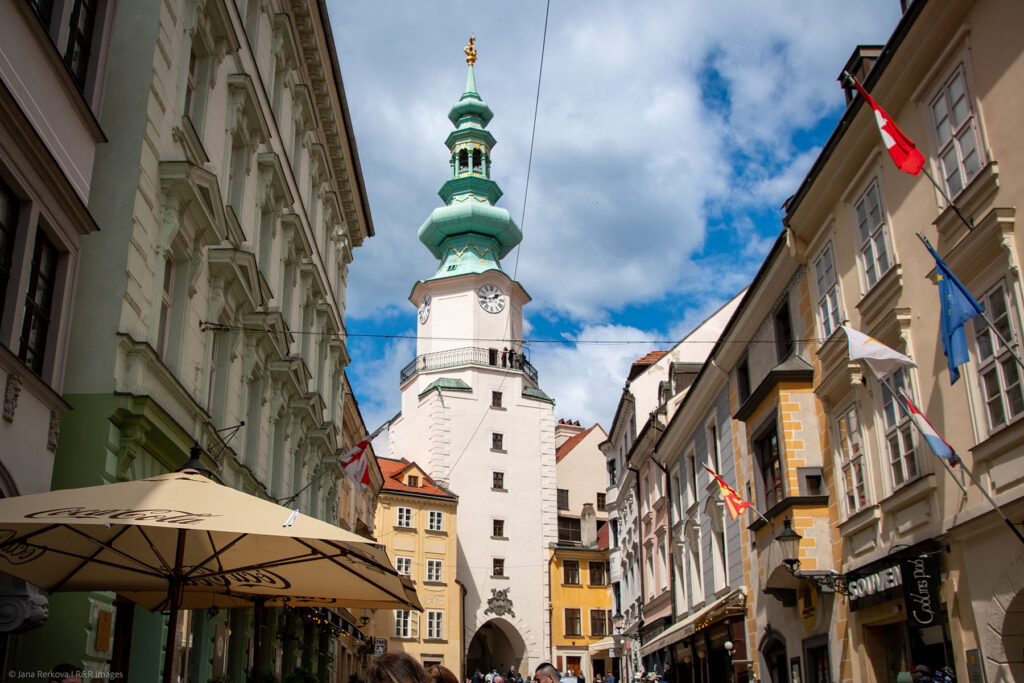
For many people, Michael’s Gate is the starting point for exploring Bratislava’s Old Town. And as it’s the only surviving gate from the city’s medieval fortifications, it seems only appropriate that you either enter or leave the Old Town through it.
The 14th-century tower is named after the Gothic Church of St Michael, which stood nearby until it was demolished in the 16th century. And with its distinctive onion-shaped Baroque roof, it really is one of the most beautiful buildings in the Old Town. Right at the top is a statue of Archangel Michael, and you won’t believe it, but hidden inside its head is a time capsule dating back to 1758. It contains historic documents, coins, relics and messages from the people who worked on the tower. During recent restoration, a new item was added to the collection.
Inside, you’ll find an an exhibition exploring the tower’s 700-year history. You can also climb to the balcony at the top to admire the views of the Old Town. If you love history or are simply curious to see what’s behind this icon, you’ll enjoy visiting the tower. As for the views, those towards Bratislava Castle are pretty good, but when you look out over the rest of the Old Town, you’re mostly looking at rooftops. For me, the view along Michalská Street is actually better from street level than from up here.
If you want to visit the tower, you can buy your ticket at the Red Crayfish pharmacy (U Červeného Raka) next door. It’s no longer a working pharmacy, but one of the most unusual visitor centres in Bratislava, complete with original 19th century pharmacy furnishings and even older Baroque paintings. And even if you don’t want to climb the tower, take a peek inside.
And don’t miss the brass ring set into the pavement when you go through the gate. It’s Bratislava’s Kilometre Zero, showing distances from Bratislava to some of the world’s best-known cities. And, while you’r exploring the area, look out for the tiny house at Michalská 15. At just 1.3 metres wide, it’s said to be the narrower house in Bratislava, and possibly one of the narrowest in Europe.
Planning a visit? Admission to Michael’s Tower costs €6 for adults, and the tower is closed on Tuesdays. Check the official website for current opening hours and admission prices.
13. Visit the spectacular ruins of Devín Castle
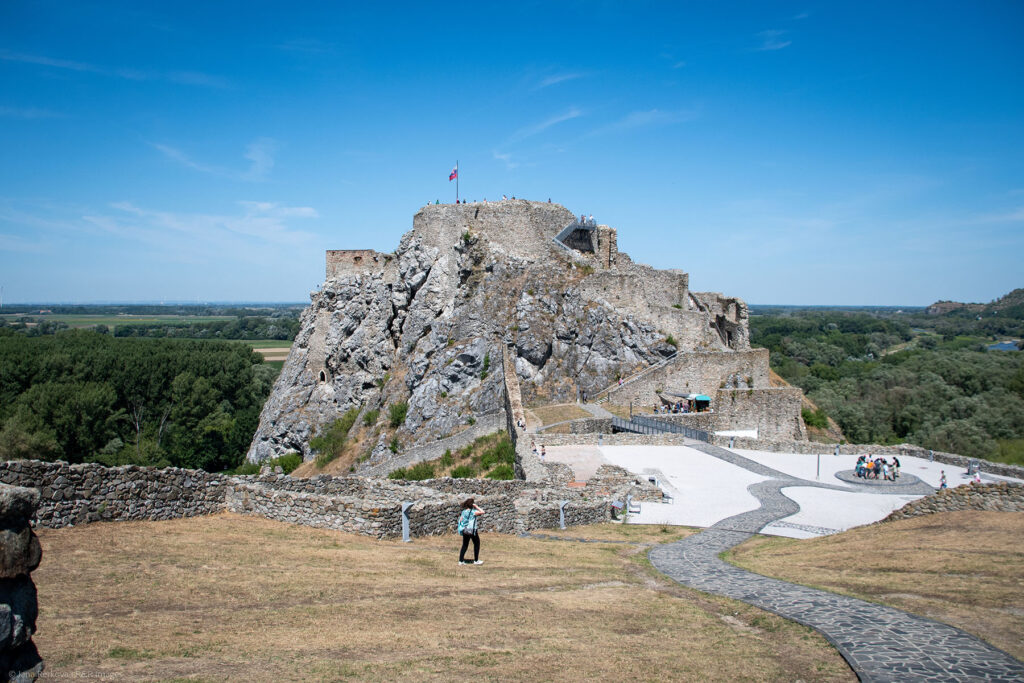
If there’s one castle worth venturing outside Bratislava’s city centre for, it’s Devín Castle – one of the largest castle ruins in Slovakia and one of the most important archaeological sites. It’s not that far from the city centre, only about 12km west, and an easy 20-minute direct bus ride.
It’s a spectacular ruin perched on a rocky hill right where the Danube and Morava rivers meet. So what makes it worth visiting isn’t just its rich history, its scale or the archaeological discoveries, it’s also the stunning setting, with views across the rivers, over the surrounding hills and into neighbouring Austria.
Its history goes back thousands of years, with the Celts among its early settlers. The castle’s last private owners were the wealthy Pálffy family, who sold it to the Czechoslovak government in 1932 for a symbolic sum. By then, the castle had already been a ruin for more than a century, having been blown up in 1809 by retreating French troops during the Napoleonic Wars. The archaeological discoveries include Celtic workshops, Roman stone buildings, the foundations of a Great Moravian church and even a carbonise loaf of sourdough bread dating back to the 5th century. Yes, a loaf of bread that survived for over 1,500 years was found here. Though you’ll only see a replica when you visit.
There are three sections to explore here: the lower, middle and upper castles, with remains from different historical periods, with information panels dotted around the grounds. No fancy interiors here.
I really enjoyed wandering around its grounds and the views from its recently renovated observation deck are also very impressive. You’ll see the ruins of the middle and lower castles below, the slopes of Devínska Kobyla, the meeting point of the Danube and Morava rivers and even the neighbouring Austria. It’s a beautiful setting, and a world away from the busy streets of Bratislava. And, if you combine your visit with a river cruise, you’ll be in for a real treat.
Planning a visit? Admission to the Devín Castle costs €8 for adults, but it’s free with the Bratislava Card. The castle is closed on Mondays. For current opening hours and admission prices, check the museum’s official website.
How to get to Devín Castle? The castle is easy to reach by public transport. A direct bus from Most SNP takes around 20 minutes, with buses running roughly every 15 minutes. A single ticket costs €1.20 if you pay by card. If you are planning to use public transport throughout the day, consider buying a 24-hour ticket for €5.40. Alternatively, you could buy a Bratislava Card, which included unlimited public transport and admission to Devín Castle. You can use imhd.sk to plan your journey.
You can also reach Devín by river cruise. Although it’s a more expensive option, it’s also a more scenic way to travel. So if you’re looking for a memorable way to experience the Danube, it’s worth considering.
14. See the Slovak Philharmonic Orchestra at the historic Reduta*
What better place to see the Slovak Philharmonic Orchestra than on their home stage at Bratislava’s historic Reduta?
I first heard about their reputation from my boss while working in London. He thought they were incredible. And although I couldn’t really have a conversation with him about it, because classical music wasn’t exactly my thing at the time, his enthusiasm was enough to spark my interest.
The Slovak Philharmonic Orchestra was founded in 1949 and has since performed in nearly every European country, as well as in the United States, Asia and the Middle East. The orchestra has also made numerous recordings for radio, television and music labels. And while they regularly perform abroad and at music festivals around Slovakia, you can also hear them perform at home in Bratislava.
Their home is the historic Reduta building in Bratislava’s Old Town. In the 18th century, there was a granary on this site, but in the early 20th century, it was transformed into an elegant cultural venue, combining Neo-Baroque architecture with Rococo and Art Nouveau details. The concert hall, decorated with beautiful stucco work and stained glass, seats around 700 people. The concert season runs through much of autumn, winter and spring, with the annual Bratislava Music Festival a major highlight. If you’re visiting around Christmas and New Year, look out for the special festive concerts.
Tickets start from around €14, and Reduta is within easy walking distance of the Old Town’s main attractions. So if you enjoy classical music, or simply fancy doing something a little different during your visit, it’s worth checking what’s on. You can browse upcoming performances and book tickets directly through the Slovak Philharmonic’s official website.
*This one is on my list for my next visit to Bratislava. I’m recommending it because I’ve listened to the orchestra on several occasions, and they truly are incredible. I’ve just not had a chance to see them perform live at Reduta.
15. Discover Bratislava’s thriving food and bar scene

Bratislava isn’t yet the foodie capital of the world, but at the rate its food scene is developing and changing, it might just get there one day. And there’s a lot more to discover than langoš, although a good one can also be absolutely delicious.
From traditional Slovak restaurants and lively beer pubs to modern bistros, bakeries, cafés and wine bars, there’s plenty to get excited about here. Here are a few places I’ve tried and would happily recommend, along with a few more that are still on my list.
Snacks, coffee and something sweet
Bratislava has some excellent bakeries, traditional confectioneries and cafés. I really enjoyed the coffee and pastries at Spusta Café in the Old Town. For something sweet later in the day, Luculus and Koun are two gelaterias I tried and loved.
If you’re after something savoury, seek out places serving chlebíčky, traditional open-faced sandwiches with all sorts of toppings. Two or three can make a satisfying light meal without putting much of a dent in your budget. Bistro Gourmet was a winner for me.
Lunch without breaking the bank
If you’re travelling on a budget, look out for daily lunch menus (denné menu). Many restaurants offer a set lunch, often including soup and a main course, at a considerably lower price than ordering from the regular menu. In some places, you can eat for around €10.
Dinner worth looking forward to
For dinner, I tried two restaurants recommended by friends: Factory on Biela Street and Spilka. Both serve traditional Slovak dishes, sometimes with a slightly more modern twist, and both were incredibly good. I’d happily recommend either. At Factory, I tried potato dumplings filled with smoked meat, served with horseradish sauce. Absolutely delicious. At Spilka, I had bryndzové halušky served with perfectly cooked beef. An unusual combination, but absolutely incredible.
There are four more places on my list: Quinsboro, which I’ve heard serves excellent burgers; La Due Sicilie for Italian food, including pizza; Dock 7, a restaurant and craft brewery housed in a historic warehouse on the Danube waterfront; and Chernomorka, apparently a go-to place for seafood. I passed by Chernomorka, and it was absolutely packed. Which is always a good sign.
A drink to finish the day
If you enjoy wine, Bratislava has some great places to discover Slovak wines, especially those produced in the surrounding region.
I visited two very different wine bars, both of which I’d be going back to. Viecha pod Hradom had an incredible atmosphere, with people sitting outside, chatting and enjoying regional wines. Vinotéka pod Hradom was quite the opposite. A small, boutique wine bar that felt like one of those places locals would rather keep to themselves. It has a great selection of Slovak and international wines, and I particularly liked the concept: you buy a bottle, enjoy it there, and if you don’t finish it, you can take the rest home.
Want to discover more of Bratislava’s food scene? Explore local food tours.
Practical Guide for Visiting Bratislava
Best time to visit Bratislava
Bratislava is a year-round destination, with hot summers and colder winters. If you want pleasant weather, fewer crowds and reasonable prices, May and September are two of the best months for a city break. Just bring a jumper or light jacket for the evening.
How to get to Bratislava?
By plane: Bratislava has one international airport, around 9 km from the city centre, with flights from a number of European destinations. Vienna International Airport is another excellent option. It’s roughly an hour from Bratislava by direct bus. If you’re planning to fly, compare both airports before booking. You might be surprised by the differences in prices and flight options.
Compare flights to Bratislava and Vienna on Expedia
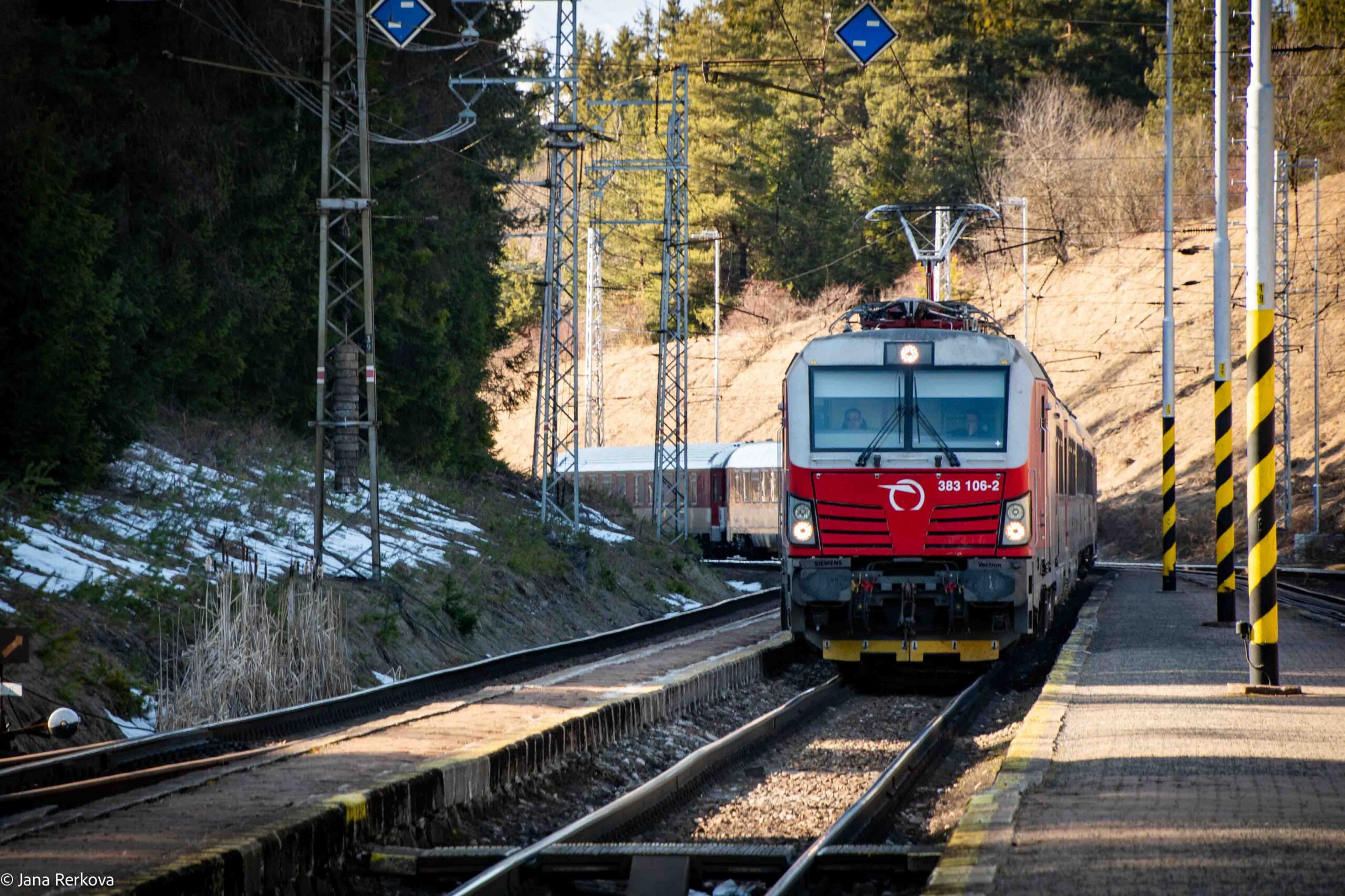
By train: Travelling to Bratislava by train is a great option if you’re already in Central Europe. The city has excellent international rail connections, with direct trains from Vienna, Prague, Brno and Budapest. If you are arriving by train, you’ll most likely arrive at Bratislava’s Main Train Station (Bratislava Hlavná Stanica).
By bus: Long-distance buses can be one of the cheapest ways to get to Bratislava, particularly if you’re travelling from a nearby European city. If you’re arriving in Bratislava by bus, you are very likely to be arriving at the Nivy Bus Station, a modern bus station about 2km from the Old Town.
How to get to the city centre?
From the airport: It takes just over 30 minutes to reach the city centre by public transport, and it’s also the cheapest option. Take Bus 61 to Račianske mýto, then change to Tram 3 to Poštová stop. Alternatively, take bus 61 to Trnavské mýto, where you can change to either Tram 4 to Most SNP or Tram 9 to Poštová. Bus 61 also continues all the way to the Main Train Station. Expect to pay around €1.60.
If you’re arriving late at night or prefer using a taxi, you can use Bolt or AIRPORT SERVICE. Both offer services from Bratislava Airport. Bolt works much like Uber: simply download the app and book your ride. You can also book Bolt from the self-service kiosk in the Arrivals Hall if you don’t have the app or mobile data.
From the main train station: The Old Town isn’t far from the station. If you are here for a day trip and travelling without luggage, walking is probably the best option. It takes about 20 minutes. Alternatively, take Bus 93 to Hodžovo Námestie or Tram 1 to Poštová stop.
From Mlynské Nivy (bus station):
Getting to the Old Town from Nivy is straightforward. Take Trolleybus 60 or 72 to Rajská, Trolleybus 42 to Hodžovo Námestie, or Bus 70 to Most SNP.
Where to store your luggage in Bratislava
If you’re visiting Bratislava for day or arriving before your hotel check-in, there are several places where you can leave your luggage while you explore the city.
Bratislava Main Train Station: Bratislava’s main train station now has self-service luggage lockers operated by Tamburi. Lockers come in three sizes – small, medium and large – with the largest measuring 47 × 41 × 62 cm (H × W × D). These are among the most affordable luggage storage options in Bratislava. The lockers are easy to use, with instructions available in English.
Nivy Bus Station: You’ll find luggage lockers at Nivy Bus Station, on the first floor of the Nivy shopping centre.
Most convenient options:
Radical Storage lets you book luggage storage at participating hotels, shops and other businesses around the city. Locations and prices are shown in the app. I’ve used it, and it’s by far the most convenient options I’ve found.
Tamburi has luggage lockers dotted around Bratislava. For a full list of locations and up-to-date prices, visit tamburi.sk. The website is in Slovak only, but you can use your browser’s translation feature.
How to get around Bratislava?
Bratislava city centre is best explored on foot. The Old Town is small, and many of the main sights, cafés, restaurants, and viewpoints are within walking distance of each other.
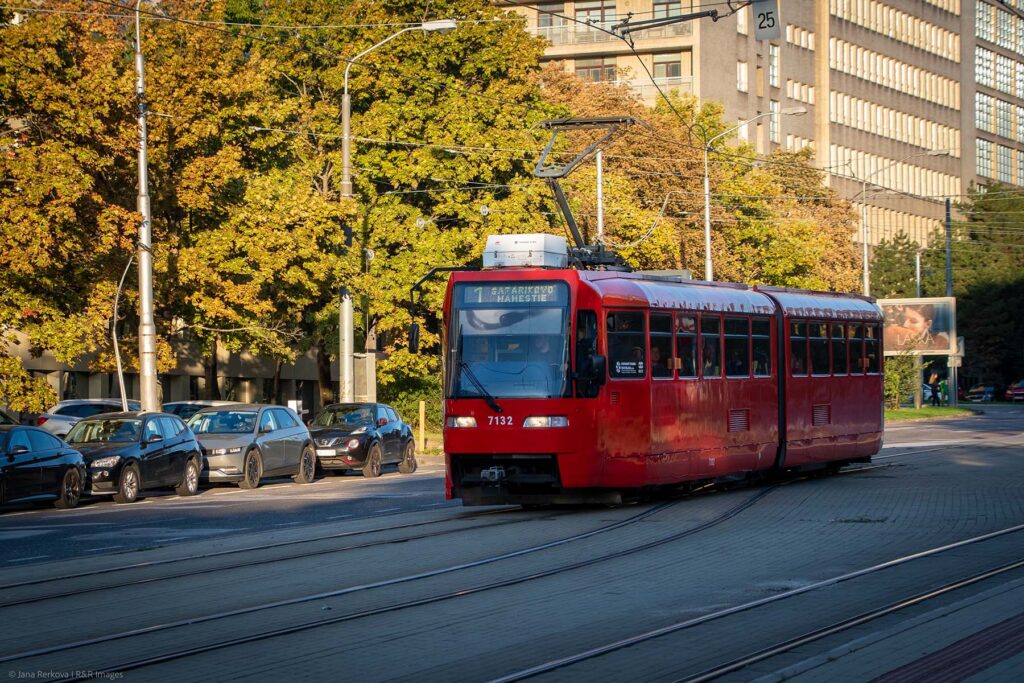
By public transport: If you want to travel beyond the historic centre — or simply give your legs a break — the city has an extensive network of trams, buses and trolleybuses connecting the centre with the rest of the city. Selected routes also operate at night.
By bike: Bratislava is a great city to explore by bike. There are around 130 km of cycling routes. One of the cheapest options is Slovnaft Bajk, Bratislava’s bike-sharing scheme, with hundreds of bikes and more than 100 docking stations across the city. A two-day pass costs around €10.
By taxi: For getting around Bratislava by taxi, Bolt and Hoppin are two of the easiest options. They work much like Uber: download the app, enter your destination and book your ride. If you use a regular taxi, it’s generally cheaper to order it by phone or through an app rather than hailing one on the street.
Public transport essentials
Planning your journey
Use Google Maps or mapy.com to work out the best way of getting around Bratislava. They’ll show you whether your destination is within walking distance or whether it makes more sense to take public transport, cycle or drive.
If you’re travelling by bus, tram or trolleybus, use imhd Bratislava for more detailed public transport information. The journey planner shows you which service to take, where to change and how long the journey is likely to take. Knowing the journey time will help you work out which ticket you need to buy.
For cycling, mapy.com are particularly useful for planning routes and finding cycle paths.
Buying tickets for buses, trams and trolleybuses
Bratislava just made buying tickets easier. On buses, trams and trolleybuses, you can buy your ticket directly on board by tapping your bank card on one of the ticket machines. There is usually at least one contactless machine on board. Alternatively, buy your ticket before you board from one of the ticket machines at the stop. Older machines are yellow and newer machines are red, with card payment available at newer machines.
You can choose from a 30 min, 60 min or 24 hr ticket and make unlimited journeys within the ticket’s validity period. The Bratislava Card includes unlimited public transport for the duration of your card.
Don’t get caught out
If you’re travelling with a paper ticket, validate it as soon as you board – before finding a seat or sorting out your luggage . The yellow card machine stamps the ticket with the date and time, which starts its validity period.
If you buy an electronic ticket on board using your bank card, you don’t need to validate anything separately — your purchase automatically records the start of your journey.
Always travel with a valid ticket. An unstamped ticket is not a valid ticket, so don’t be tempted to wait. Plain-clothes ticket inspectors are common on public transport in Bratislava, and travelling without a valid ticket can result in a fine starting at €79.
Where to stay in Bratislava?
On my last visit, I stayed at Hotel Saffron, near the Slovak Radio building and within walking distance of the city centre. I’d definitely consider staying there again. The hotel was reasonably priced, clean, quiet and the breakfast was excellent.
Find accommodation in Bratislava on Expedia
How to save money with the Bratislava Card
The Bratislava Card is genuinely worth considering if you plan to visit several attractions.
It includes:
- Unlimited public transport
- A free guided walking tour of the historic centre
- Free entry to many attractions, including Bratislava Castle, Primate’s Palace, the Old Town Hall, St Martin’s Cathedral, Michael’s Tower and Devín Castle
- Discounted entry to other attractions, including the UFO Observation Deck, Danubiana and more
A three-day card costs around €39, which feels like pretty good value considering how quickly transport and attractions tickets add up. t’s also a great way to experience many of Bratislava’s historic sites from the inside – not just admire them from the outside.
Find out more about the Bratislava Card.
How many days do you need in Bratislava?
For Bratislava itself, two days would probably be enough to explore the main attractions. But if you want to venture out to places like Devín Castle and Danubiana, without rushing from one attraction to another, three days would be ideal. And if for whatever reason, you find yourself with some time to spare, remember that Vienna is only an hour way by bus.
If you’re planning a long weekend in Bratislava, I’d recommend visiting from Friday to Sunday, as many museums, galleries and palaces are closed on Mondays.
Is Bratislava worth visiting?
If you had asked me ten years ago whether Bratislava was worth visiting, I probably would have told you not to bother. Go to the High Tatras instead. Now, in 2026, a city once destined to sit in the shadow of Vienna, Budapest and Prague is finally emerging as a worthy Central European capital.
Yes, Bratislava is smaller than its neighbours. Maybe a little quirkier, too. At times, still rough around the edges. But it’s vibrant, increasingly cosmopolitan, with a great atmosphere and a huge amount of things to do.
The main train station might still bother me. But the city?
The city is quite incredible.