The first time I visited Westminster Abbey, I was sixteen, tagging along on a school trip to London. I wasn’t particularly interested in history, the monarchy, art or architecture — so all I remember from that visit are tombs. But when I recently returned, now with a new appreciation for beauty, craftsmanship and quiet grandeur, I realised just how much I’d missed the first time.
Westminster Abbey isn’t just another tourist attraction. It’s one of Europe’s greatest Gothic churches, a place of worship, and a UNESCO World Heritage Site. Monarchs have been crowned and buried here, knights and dames are still ceremonially installed, and daily services continue. Yes, the London Eye is fun. Madame Tussauds is entertaining. And the views from Horizon 22 or the Sky Garden are impressive. But if you’re wondering whether Westminster Abbey is worth visiting — or debating what truly deserves a place on your London bucket list — this iconic church is in a league of its own.
Five reasons why Westminster Abbey deserves a place on your London bucket list.
1. You will be amazed by its Gothic architecture
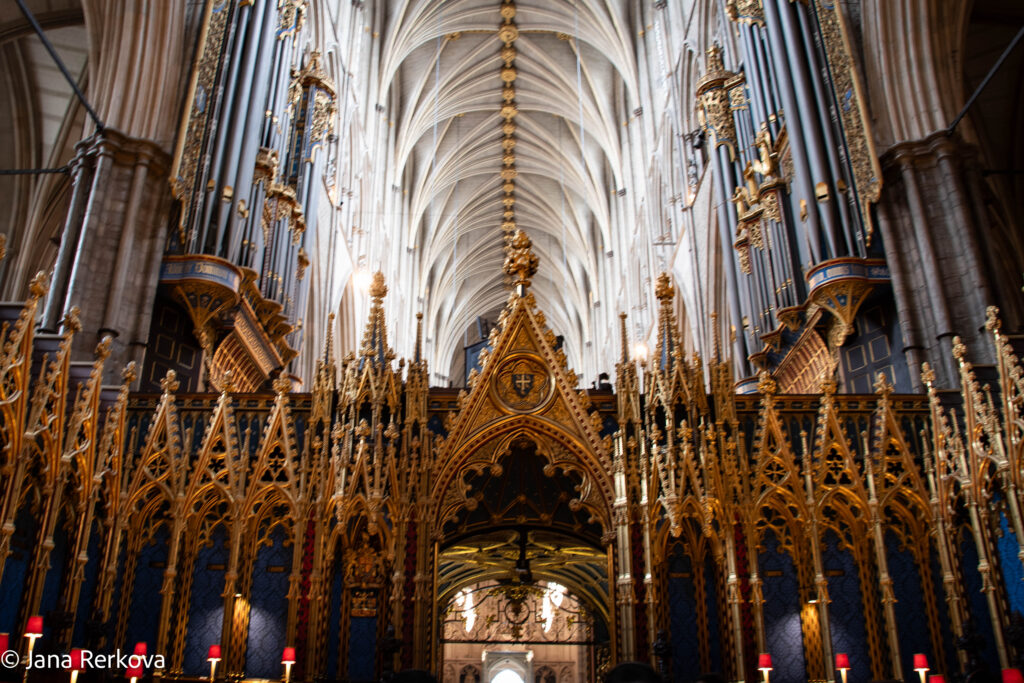
From the soaring 102-foot-high Gothic vault of the nave and the round rose windows on the transepts to the delicately carved fan-vaulted ceiling of the Lady Chapel, Westminster Abbey is not just a masterpiece of Gothic architecture, it might just be the most captivating architecture lesson you’ll ever receive.
The pointed arches and ribbed vaults create a sense of grandeur, while the narrow aisles exaggerate Abbey’s height and scale. Rebuilding the Abbey in the Gothic style began under Henry III in the 13th century and wasn’t completed until 1745, when the West Towers were finished. One detail that’s not immediately obvious is the shape of the building itself. Westminster Abbey was the first church in England designed in the shape of a cross. And, as you walk along the nave, you’re tracing the body of the cross; when you reach the centre, you’ll find yourself standing where the transepts form the arms.
The architecture here isn’t just beautiful — it’s a quiet tribute to vision, continuity and craftsmanship. When something takes hundreds of years to build, the result is bound to be extraordinary.
2. You will be impressed by the artistic detail inside the Abbey
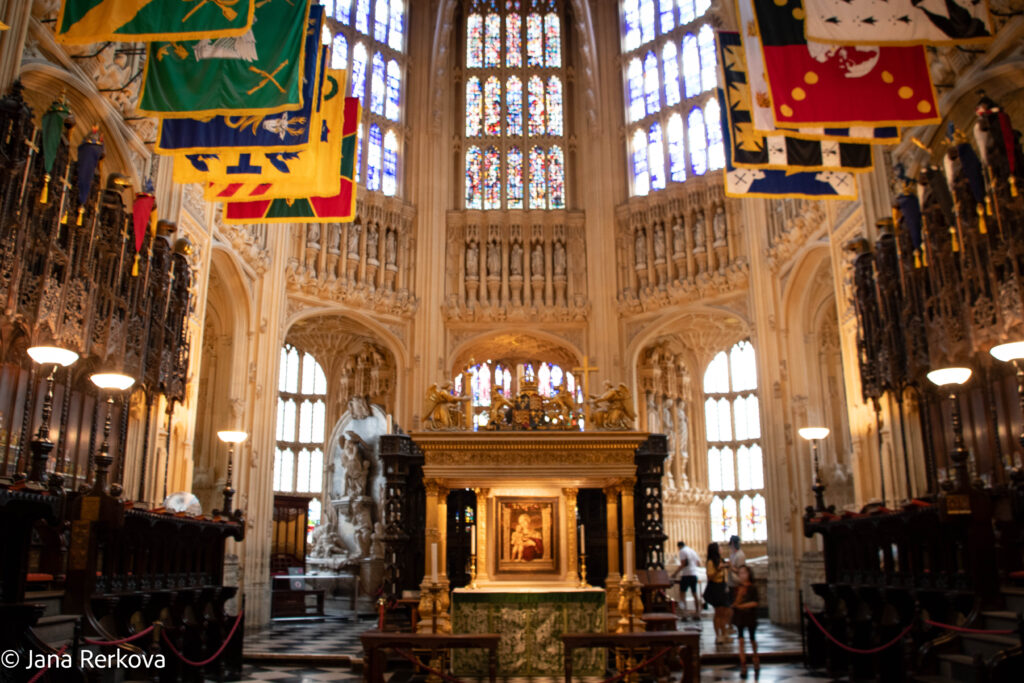
From the moment you queue to enter the church to the moment you step back outside, you’ll find extraordinary detail everywhere — carved into stone, hidden in corners, painted on glass. At times, it feels as if the world’s greatest artists and craftsmen descended upon this place, each leaving behind a masterpiece worthy of its place on the UNESCO World Heritage list.
The soaring vaults, stained glass windows, intricate arch mouldings and the fan-vaulted ceiling of the Lady Chapel, are all masterpieces in their own right — layered with meaning and astonishing detail. And, the Abbey’s collection of sculpture and monuments is equally impressive. Whether you’re admiring memorials to monarchs, poets, prime ministers or scientists, or the statues of saints around the Lady Chapel, what you are seeing is one of the most important sculptural collections in the country.
And then there are the one-of-a-kind treasures: the Coronation Chair from 1300; the beautiful 13th-century Cosmati marble pavement in front of the High Altar; St Edward’s Shrine, or the organ, with pipes so long they lie horizontally above the aisles. You could spend a whole day here and still miss something.
3. You will see where Kings and Queens have been crowned for centuries
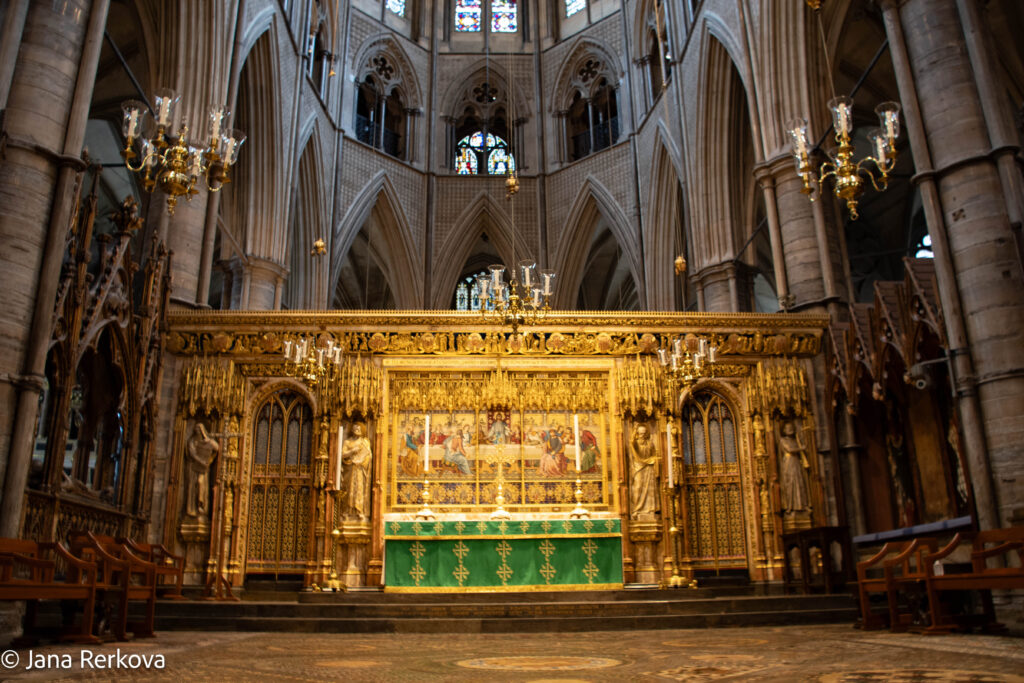
Few places in the world are as closely tied to monarchy as Westminster Abbey. Since 1066, every British monarch has been crowned here, from William the Conqueror to King Charles III in 2023.
When rebuilding the Abbey, Henry III made sure there was a space large and grand enough to host coronations. This grand space, where the ceremony takes place, sits right at the heart of the Abbey, where the nave and transepts meet, and is known as the Coronation Theatre. When you find yourself in the Coronation Theatre, it’s worth pausing, not just to admire the craftsmanship of the High Altar or the striking medieval Cosmati Pavement in front of it, but to reflect on the past, the triumphs and the turmoil, both of which have shaped the world we live in today.
This is a place where many take a moment to sit, listen to the audio guide, and soak in the atmosphere and snap a photo that captures more than just a building.
4. You will walk among the greats
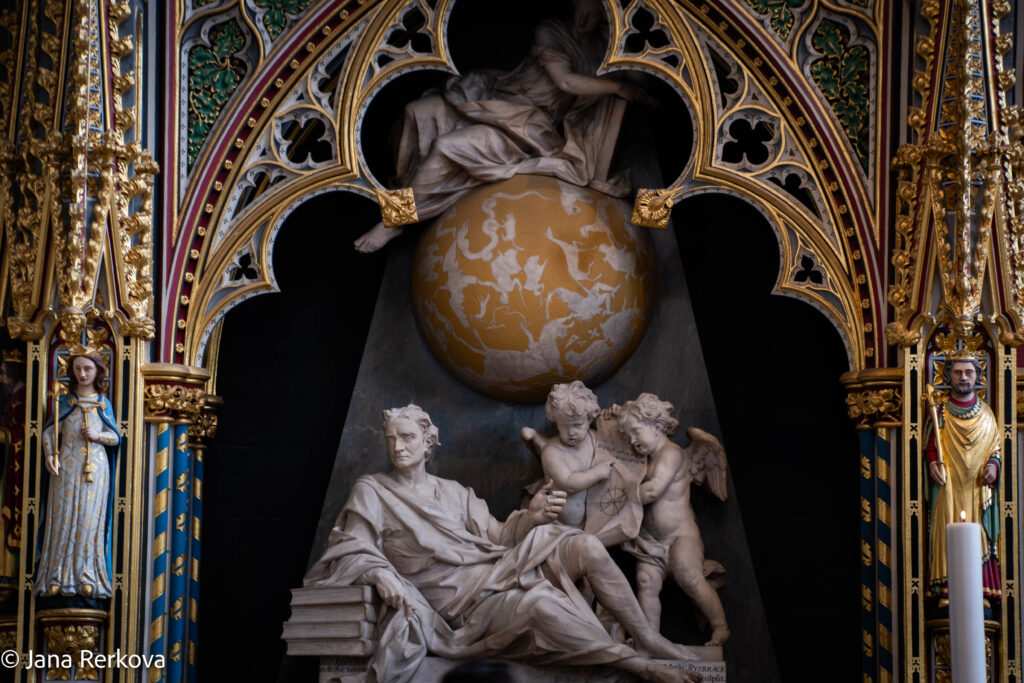
Westminster Abbey is more than a coronation church, it’s also a resting place for kings, queens, prime ministers, poets, writers, and other great figures you once learned about at school. And, walking among their tombs is a strange experience.
As you make your way through the Abbey, you’ll notice tombs tucked into chapels, raised above eye level or lying directly beneath your feet. Some are lavish and elaborate, others are surprisingly modest. While some are protected behind railings, others you’ll walk over without even realising they’re graves. Thirty kings and queens are buried here, including King Edward the Confessor, Elizabeth I, Charles II, Henry V and Henry VII. Among them are other truly extraordinary figures: Sir Isaac Newton, Charles Darwin, Stephen Hawking, Charles Dickens and George Frideric Handel (think Hallelujah). And then there’s the Tomb of the Unknown Warrior — perhaps the most quietly powerful of all.
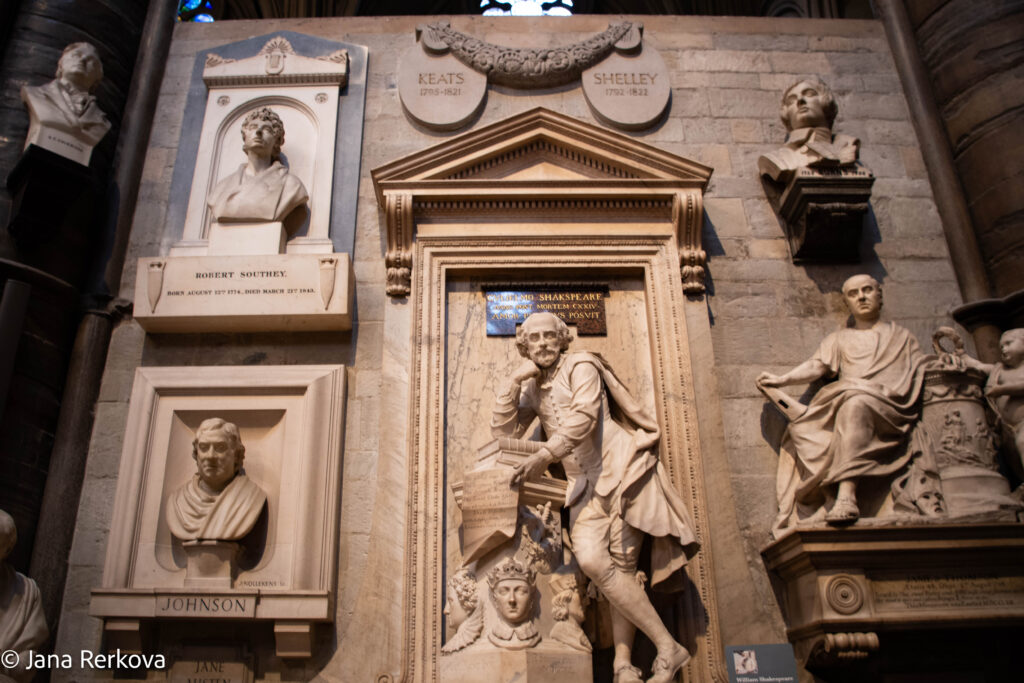
The oldest and most lavish tomb in the Abbey is that of King Edward the Confessor, who founded the church in 1065. While you can’t get close to it — unless there is a prayer service and you attend — you can catch a glimpse of the magnificent shrine through the entrance to his chapel. If you’re a lover of literature, don’t miss Poets’ Corner. Over 100 poets and writers are buried or commemorated here, from Chaucer to Kipling and Dickens.
5. You will leave with stories worth sharing
You don’t need to be a history buff to enjoy Westminster Abbey — but you might become one by the time you leave.
The free audio guide will be your best companion, walking you through the Abbey’s story — from its early beginnings to its role in modern-day royal ceremonies and daily worship. As you move through the church, it introduces you to historical figures, architectural features, artistic treasures and centuries-old traditions. It’s a rich, captivating narrative, and there’s a lot to absorb. And, if you remember even half of what you hear, you’ll walk away not only inspired, but ready to impress at your next dinner party.
One tip: listen first, then look. It’s easy to get visually distracted by the space around you. I had to rewind more than once after realising I completely missed something fascinating. And, note that the audio doesn’t include the Cloisters or the Queen’s Diamond Jubilee Galleries, so leave time to explore those areas on your own.
Five Tips to Make the Most of Your Visit to Westminster Abbey
1. Use the free audio guide — and pick up a map
The audio guide is available in several languages and brings the Abbey to life with stories, context, and hidden details you might otherwise miss. The map helps fill in the gaps — especially in areas the guide doesn’t cover, like the Cloisters and Galleries
2. Give yourself time — at least two hours
There’s a lot to see. Aim to arrive before 2 PM, especially if you want a full, unhurried visit. If you arrive after 2 PM, be aware that some areas begin closing around 4 PM to prepare for Evensong.
3. Want better photos? Be the last person in the room.
It’s hard to avoid crowds here. But if you time it right, you can get beautiful, crowd-free shots — especially in the Lady Chapel and Nave. If you’re in the Lady Chapel just before 4 PM, you might find yourself with the space all to yourself. Just note: you’ll have to move quickly through the remaining areas.
4. Don’t rush — pause and soak it in.
The Abbey has seats and benches throughout, plus a café in the Cloisters and accessible toilets. It’s a place to reflect, not just rush through.
5. For something truly special, attend Evensong.
Held most evenings at 5 PM, Evensong is free to attend and doesn’t require a ticket. It’s peaceful, moving, and shows the Abbey in a more authentic light.
When to visit, Ways to Save & How to book
When to visit
- Daily from 9:00 AM to 3:00/3:30 PM (seasonal variation)
- Included in General Admission: Access to the Cloisters, Chapter House, and Pyx Chamber.
- Queen’s Diamond Jubilee Galleries require an extra ticket
- Students and over 65s receive a small concession
- Upgrade to an annual pass at no extra cost (it allows for 2 extra visits, non-transferable)
- National Rail 2-for-1 offer is valid on walk-up tickets (not online bookings)
- The London Pass includes entry (a good deal if you’re visiting multiple top sights)
Ways to save
- Children under 5 go free
- Family tickets are available (e.g. 1 adult + 1 child for £30)
- Students and over 65s receive a small concession
- Upgrade to an annual pass at no extra cost (it allows for 2 extra visits, non-transferable)
- National Rail 2-for-1 offer is valid on walk-up tickets (not online bookings)
- The London Pass includes entry (a good deal if you’re visiting multiple top sights)
How to book
You can book your tickets in advance via the official site:
➡️ Official Westminster Abbey Tickets
So, is Westminster Abbey worth visiting?
Whatever brought you to London — whether it’s history, royalty, architecture, shows, events or the ever-evolving skyline — Westminster Abbey is unlike anything else you’ll experience in the city. It will not only leave you in awe of its architecture, craftsmanship and sheer scale, but also connect you to a thousand years of history, ceremony, tradition and human achievement.
So yes — it’s absolutely worth visiting.
