What I Loved About Slovakia’s Most Beautiful Town (and Why I’ll Be Back)
Winding cobblestone streets, picturesque townhouses, castles, old churches, underground mining tunnels and even man-made lakes. This is what makes Banská Štiavnica one of the most beautiful towns in Slovakia.
What was once one of the richest mining towns in Europe is today a UNESCO-listed town with perfectly preserved medieval character. But Banská Štiavnica is more than just a fascinating historical stop on a Slovakia itinerary. From exploring castles and underground mines to hiking and cycling through the surrounding hills, and even relaxing by the tajchy lakes, it offers far more than you might expect from a town of this size.
Quiet during the off-season and busy, vibrant and full of life during the summer months, Banská Štiavnica makes a perfect weekend escape.
In this blog, I’ll share what captivated me about this town, what I tried and would genuinely recommend to a friend, what I missed simply because there wasn’t enough time, practical travel tips, and why I think more people should visit — even if getting here without a car isn’t always the most straightforward journey.
In This Blog
What to See and Do in Banská Štiavnica if You Only Have One Day
One day definitely isn’t enough to see everything Banská Štiavnica has to offer, but if you only have a day here, these are the experiences I’d prioritise and happily recommend to a friend. And if you plan your visit slightly better than I did, or arrive by car rather than relying on public transport, you’ll probably manage to squeeze in a few things from my “What I Missed” list too.
1. Visit the Open-Air Mining Museum & Bartolomej Mine
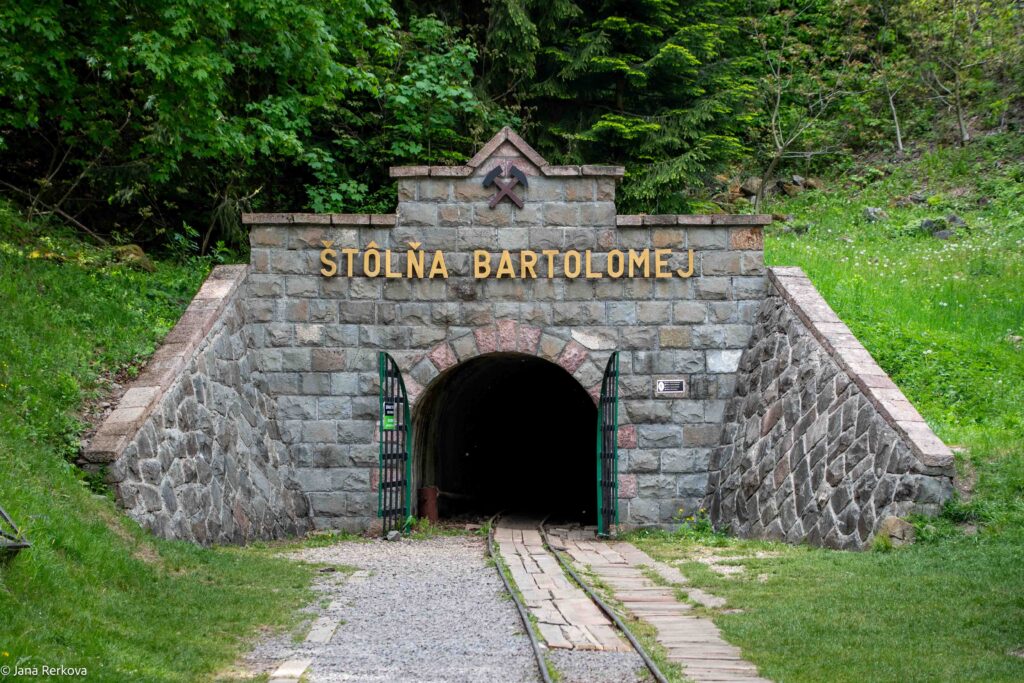
If you can only do one truly unique experience in Banská Štiavnica, make it the Open-Air Mining Museum and the underground mine tour. Not because the town’s other attractions aren’t worth paying for, but because exploring an actual underground mine is not something you can do everywhere.
There are two parts to this experience: a self-guided tour of the open-air museum and a guided tour of the mine.
And although the open-air museum, with its historic mining buildings, shafts, machinery and equipment once used during the mining process, is fascinating, it’s the Bartolomej Mine that’s the real highlight. On this guided tour, you’ll hear fascinating stories about the town’s mining history while experiencing the unique atmosphere of the underground tunnels.
But it’s not just the stories that make this experience memorable. Walking through dark, narrow tunnels with a protective helmet on and a torch in hand, surrounded by cold air, dripping water, and almost complete darkness at times, you get a much stronger sense of what life must have been like for the miners who spent long hours working beneath the town.
So, if you’re not afraid of small, dark spaces, definitely give this experience a go. It’s atmospheric, slightly eerie, genuinely fascinating — and probably one of the things you’ll remember most from your trip to Banská Štiavnica.
2. Explore the Old Castle (Starý zámok)
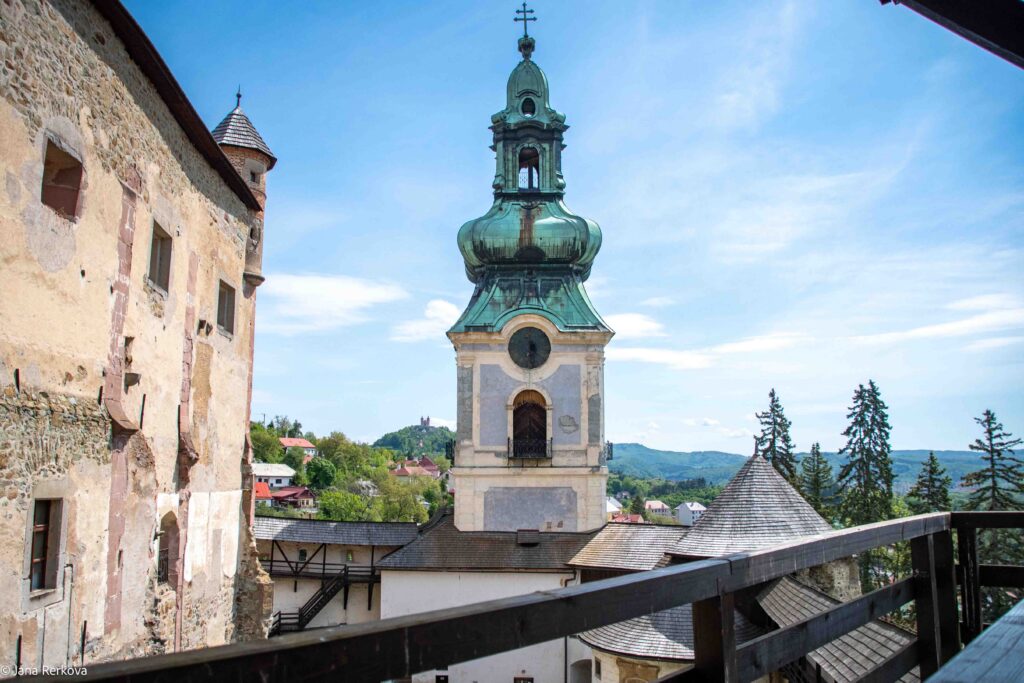
Perched above Holy Trinity Square (Námestie svätej Trojice) and just beneath the slopes of Paradajz Hill is the Old Castle — one of the oldest monuments in Banská Štiavnica. This isn’t your traditional castle. Originally built as a Romanesque basilica in the 13th century, it was gradually rebuilt into a defensive fortress as the Ottoman threat grew.
You can explore much of the outer complex at your own pace, but accessing the interior requires a guided tour. It’s worth doing if you want to hear fascinating stories about the castle and discover a few truly unique exhibitions.
I really enjoyed exploring the complex, and these three exhibitions were my favourite:
- Kalvária v azyle (“Calvary in Exile”) – a display of stunning original paintings and wooden reliefs from the 1740s, rescued from the famous Banská Štiavnica Calvary chapels.
- Exhibition of historical shooting targets – not your standard “three circles” shooting targets. These are beautiful paintings depicting everything from family coats of arms and scenes from everyday life to animals and plants, with the oldest dating back to 1754. Incredible!
- Pipe-making exhibition – apparently Banská Štiavnica was once one of Europe’s most important centres of clay pipe production. Who knew?
3. Walk up to the Calvary
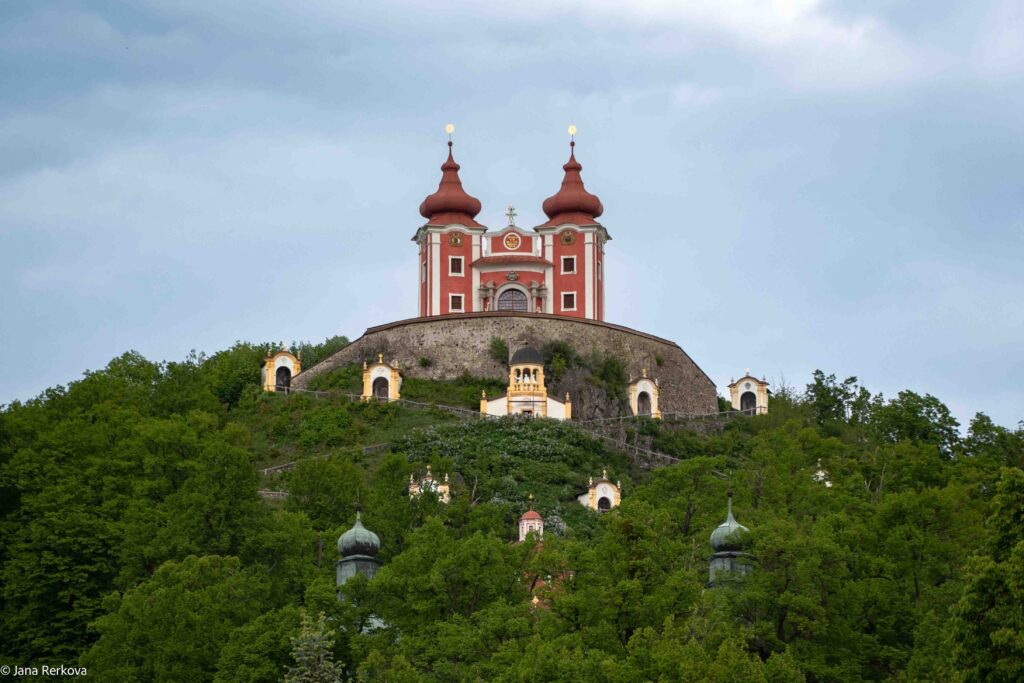
The Calvary is one of the town’s most recognisable landmarks and can be seen from almost every corner of Banská Štiavnica. So, for me, not walking up to it wasn’t really an option.
The Calvary complex was built between 1744 and 1751 and consists of churches, chapels and religious monuments spread across the hillside. For decades it was an important pilgrimage destination, but the suppression of pilgrimages during Communism led to its gradual decline. By 2007, decades of vandalism and theft had left the site in such poor condition that it was included on the list of the world’s 100 most endangered monuments. What you see today is the restored Calvary — not only one of the town’s most visited landmarks, but also a reminder of how much effort went into saving this extraordinary place.
The walk gives you a chance to appreciate one of the most beautiful Baroque Calvaries in Europe, and once you reach the top, you’ll be rewarded with some of the best views over Banská Štiavnica and the surrounding hills.
4. Stroll Through the Old Town
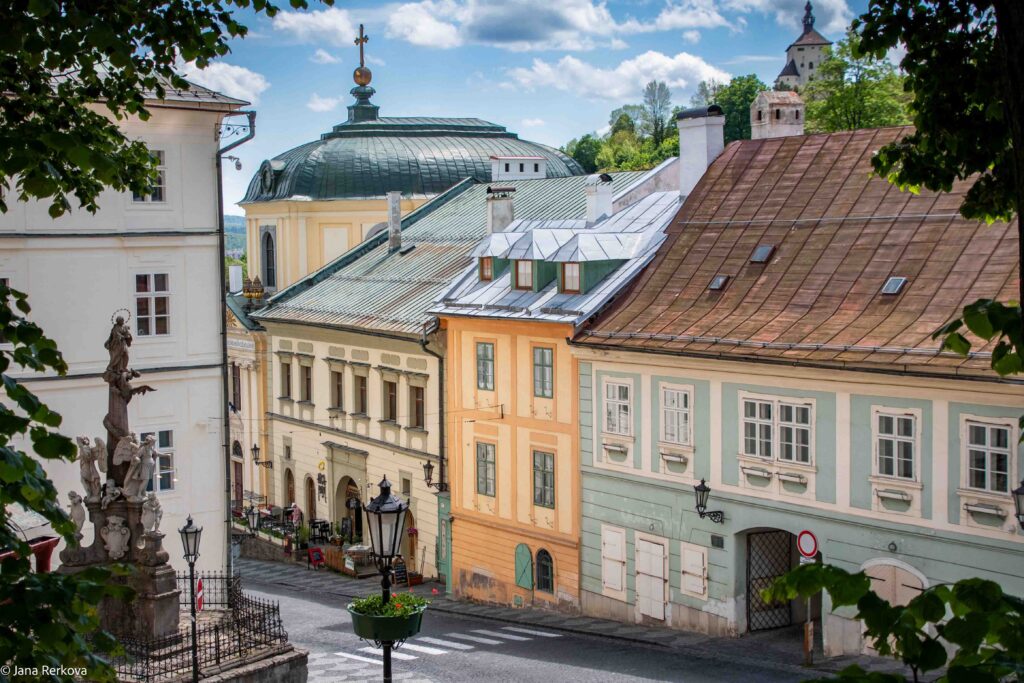
If you’ve read any of my blogs before, you’ll know that strolling through old towns almost always ends up being one of my favourite things to do.
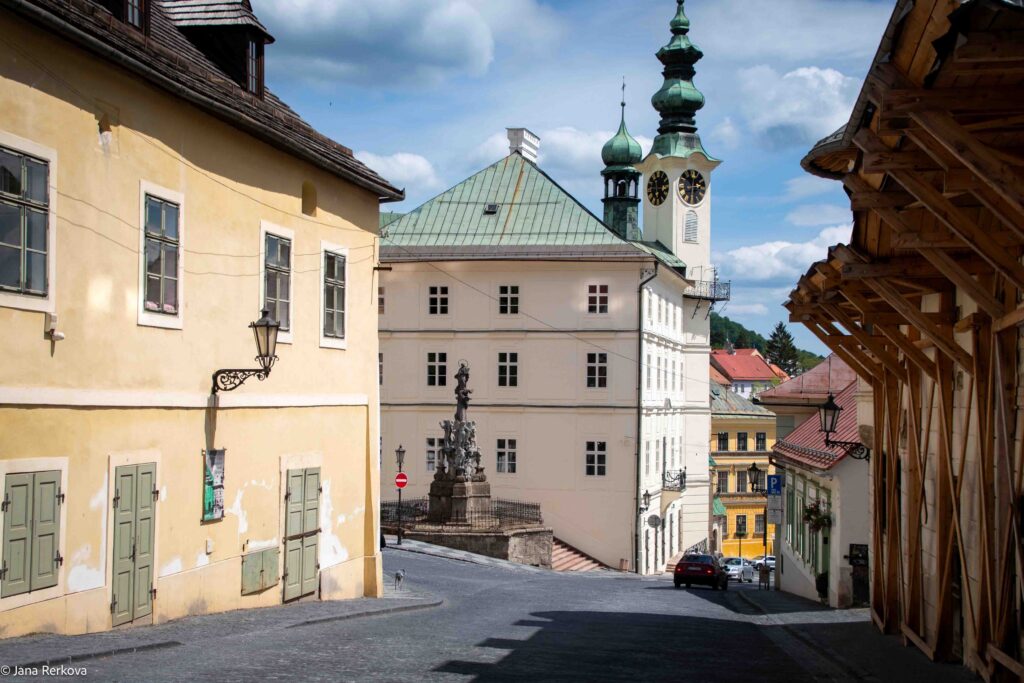
The heart of Banská Štiavnica is the Holy Trinity Square (Námestie svätej Trojice) — a beautiful square lined with Renaissance and Baroque townhouses, dominated by the impressive Holy Trinity column from the 18th century. Not far from the square are the late Gothic Church of St Catherine and the neoclassical Evangelical Church, famous for its unusually theatrical interior.
Continue further and you’ll come across Kammerhof, once the seat of the main mining authority, now home to a museum dedicated to the town’s mining history. Along Sládkovičova Street, on the way to the Open-Air Mining Museum, you’ll also pass Klopačka, the former miners’ “alarm clock” now turned cosy tea house, and Piargska Gate — the only surviving gate from Banská Štiavnica’s historic town fortifications.
When exploring the Old Town, don’t even try looking for a logical street layout. This is a beautiful maze, where streets suddenly turn into staircases, narrow alleys open into hidden courtyards, and roads that look like they lead nowhere somehow reveal another unexpectedly beautiful view.
5. Visit the Tajchy Lakes
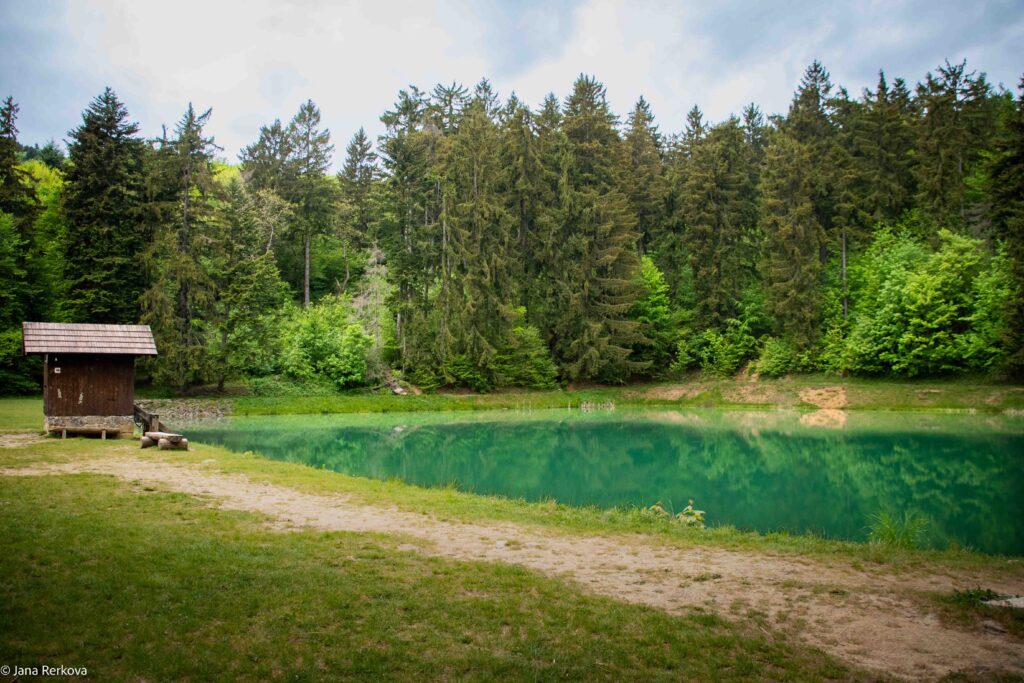
The ‘tajchy‘ lakes are one of the most unique features of the Banská Štiavnica region. These man-made lakes were built centuries ago as part of an advanced water management system and to generate power for the town’s mining industry.
Today, ‘tajchy’ are places where people come to relax, swim, picnic, barbecue, walk or simply slow down for a while.
There are around 23 of them in the town’s immediate surroundings. And, even if you only have time to visit one — just as I did — it’s worth adding it to your itinerary. The closest to the town is Veľká Vodárenská tajch. This beautiful emerald-green lake is within easy reach (if you’re not bothered by a slightly hilly walk) and is popular with both locals and visitors.
Visiting a tajch feels less like ticking off another attraction and more like spending time somewhere locals genuinely come to relax with friends or family, good food and nowhere else to be.
What I Missed (and Why I’ll Be Coming Back)
6. Experience Banská Štiavnica at Its Most Vibrant
Visiting during the off-season certainly has its advantages. The streets are quieter, accommodation is often cheaper, and there are no queues for tours, coffee or restaurants. But I also happen to enjoy places when they’re buzzing with life.
Banská Štiavnica has several events worth attending. The Štiavnica Living Chess Festival held every July, is a live chess match where real people become the chess pieces while top players battle it out. This really sounds like a fun match to watch. Then there’s Unforgettable Crafts, one of the region’s largest craft fairs, with hundreds of artisans, folk artists and food producers participating. September is home to the famous Salamander Days, celebrating the town’s mining heritage, as well as St Hubert’s Days, Slovakia’s national hunting festival.
The quiet version of Banská Štiavnica was great. Now I want to see the lively one..
7. See the Monumental Model of the Town
Banská Štiavnica has a huge scale model of the town which I didn’t get to see. It measures six by four-and-a-half metres and depicts the town as it looked around 1905. It includes 360 buildings, 5,600 windows and around 800 trees. There are day and night viewing modes, illuminated windows, street lamps and even sound effects designed to recreate the atmosphere of the town. It sounds like the sort of thing I’d happily spend an hour exploring.
8. Explore the Churches and Visit the Štiavnický Betlehem
For a town of its size, Banská Štiavnica has a remarkable collection of churches, each representing a different chapter in its history. There’s the late Gothic Church of St Catherine, the elegant Evangelical Church with its theatre-like interior, the Church of the Assumption of the Virgin Mary, and the town’s beautiful Synagogue. Churches in Slovakia often hide some truly stunning medieval art, including beautiful altars, sculptures, frescos and paintings, so they’re often worth a quick look, even if you’re not particularly interested in churches.
And then there’s another card Banská Štiavnica has up its sleeve: the Štiavnický Betlehem — a 21-metre-long wooden model of Banská Štiavnica featuring more than 800 hand-carved figures, around half of them moving. Definitely one for next time.
9. Visit Kammerhof and Try the Dielnička Workshops
I didn’t know I was interested in mining until I got to Banská Štiavnica. Kammerhof was once the headquarters of the kingdom’s mining administration, and now houses exhibitions about mining in Slovakia and the world’s first technical university — the Mining and Forestry Academy. But, with only a day here, I decided to prioritise the mine over the museum.
Another thing that caught my eye was Dielnička — the hands-on workshop based at Kammerhof. Here, children and adults can learn traditional crafts, bake bread, make enamel jewellery, paint on silk and try a variety of historical crafts.
I’m definitely coming back to try this.
10. Journey Through Time
Journey Through Time is an interactive exhibition that uses virtual reality, holograms, touch screens and other multimedia displays to transport visitors back to 18th-century Banská Štiavnica and its mining heyday. It looks like a fascinating way to learn about the town’s history and mining heritage before heading off to explore the streets, museums and monuments for yourself.
When done well, these kinds of immersive exhibitions can be incredibly powerful, so this is definitely going on my list for next time.
Practical Tips for Visiting Banská Štiavnica
🧭 How many days do you need in Banská Štiavnica?
Banská Štiavnica is one of those places where a day is enough to see the highlights, but not enough to fully appreciate everything the town has to offer.
If you’re short on time, one day will allow you to visit some of the main sights in the Old Town, tour the mine, walk up to the Calvary and perhaps squeeze in a visit to one of the tajchy lakes. But, if you’d like to explore some of the museums, churches, hiking and cycling trails, lakes and surrounding countryside at a more relaxed pace, I’d recommend spending at least two days here.
Best Time to Visit Banská Štiavnica?
Banská Štiavnica is a year-round destination, but much like Kremnica, the atmosphere changes significantly throughout the year.
- 🌸 Spring (April–June): one of the best times to visit, with pleasant temperatures, blooming nature and fewer crowds.
- ☀️ Summer (July–August): the liveliest time of year, when cafés, terraces and festivals bring the town to life.
- ♟️ Summer Events: if you’d like to experience Banská Štiavnica at its most vibrant, consider visiting during the Štiavnica Living Chess Festival or the popular Unforgettable Crafts Fair, when the streets fill with visitors, artisans, performers and food stalls.
- 🍂 Autumn (September–October): ideal for hiking, cycling and photography, with colourful forests surrounding the town.
- 🎭 Autumn Events: September brings the famous Salamander Days, one of the town’s most important celebrations of its rich mining heritage.
- ❄️ Winter (December–February): a quieter and more atmospheric time to visit, when the historic streets and surrounding hills take on a completely different character.
Is Banská Štiavnica Safe
Banská Štiavnica is generally a very safe town and feels relaxed and welcoming, even in the evening. As with any destination, it’s worth taking normal precautions with valuables, but overall it’s a place where visitors can comfortably explore on foot without concerns.
How to Get to Banská Štiavnica
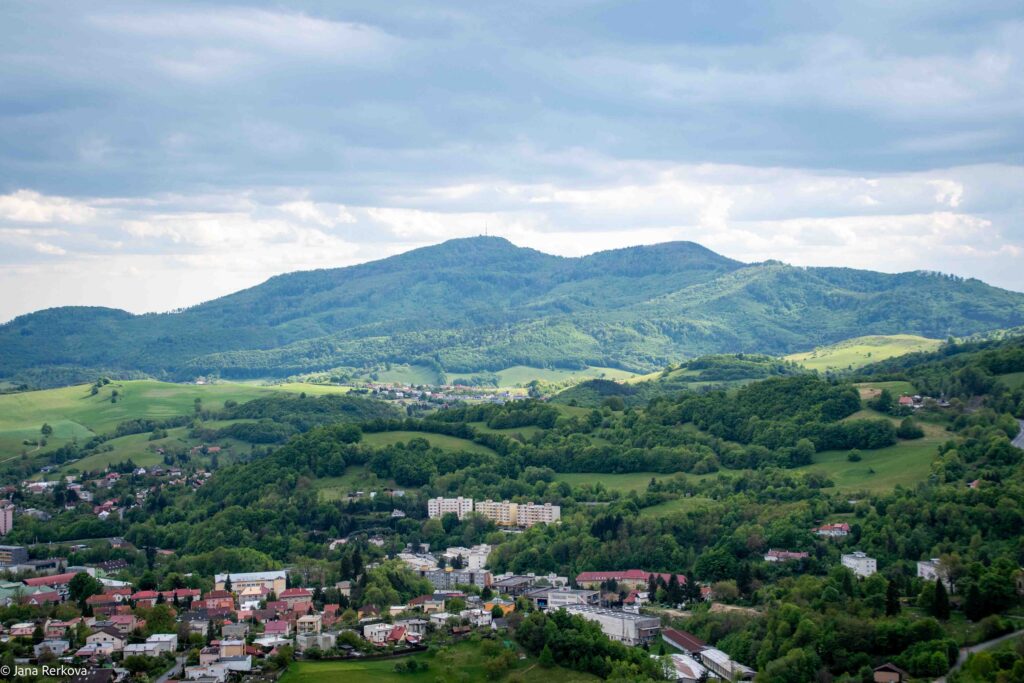
Banská Štiavnica is located in central Slovakia, surrounded by the volcanic Štiavnické vrchy mountains. You can get here:
- 🚗 By car: by far the easiest and most flexible way to visit, especially if you’d like to explore the surrounding tajchy lakes, hiking trails and nearby towns. You can use Google Maps or Mapy.com for navigation — both work well here.
- 🚌 By bus: direct bus services connect Banská Štiavnica with several Slovak towns and cities and are often the most convenient public transport option. Use CP.sk to plan your route — it’s the best app for checking train and bus connections across Slovakia.
I got here by public transport and it’s perfectly doable (although it may involve a few connections), but having a car definitely gives you more flexibility.
Use CP.sk to plan your route—it’s the best app for checking connections, but you can read our complete guide on how to get around Slovakia by train and bus for a full breakdown of tickets and lines.
How to Get Around Banská Štiavnica
Although Banská Štiavnica’s Old Town isn’t particularly large, it’s quite spread out and surprisingly hilly. So, keep that in mind when planning your sightseeing.
- 🚶 Walking: the vast majority of sights are within walking distance of each other, although be prepared for plenty of hills, staircases and cobblestone streets.
- 🚗 By car: useful if you’d like to visit multiple tajchy lakes, explore the surrounding countryside or stay outside the town centre.
- 🚌 By bus: local buses connect Banská Štiavnica with nearby villages and attractions outside the Old Town. Use CP.sk to check routes and timetables.
Banská Štiavnica Tours
Many visitors explore Banská Štiavnica independently, which is easy to do thanks to its compact town centre and well-signposted attractions. Private day tours are available through companies such as Get Your Guide and Viator, although options are relatively limited and can be quite expensive compared to exploring independently.
Getting to Banská Štiavnica without a car is perfectly doable, but it can be tricky and time-consuming depending on where you’re travelling from. So, if you’re short on time, joining an organised tour can be a convenient option.
Affiliate Disclosure: This section contains affiliate links. If you make a purchase through them, I may earn a small commission at no additional cost to you. Thank you for supporting Rucksack & Road.
Get Your Guide
There are a few Banská Štiavnica Tours available through Get Your Get your Guide.
Viator
Viator offers this tour of Banska Štiavnica: UNESCO World Heritage Banska Stiavnica Private Tour
Is Banská Štiavnica worth visiting?
Without a doubt.
Winding cobblestone streets, picturesque townhouses, castles, old churches, museums, underground mining tunnels and even man-made lakes. This is what makes Banská Štiavnica a town worth visiting.
It’s a place where you can spend the morning strolling through medieval streets and visiting a castle, the afternoon exploring an underground mine and climbing up to the Calvary, and the evening relaxing by an emerald-green lake or in an atmospheric bar. And somehow, despite everything there is to see and do, it never feels rushed or overly touristy.
If my visit taught me anything, it’s that one day here simply isn’t enough.

Great content! Keep up the good work!