You don’t have to love modern art to fall in love with this place.
When I spotted a flyer at the Bratislava tourist information centre, my first thought was: This place is in Slovakia? It looks like something I’d find in New York, Vancouver or perhaps somewhere in Netherlands. Not on the outskirts of Bratislava.
That one photograph was enough to put Danubiana Meulensteen Art Museum on my list of must-visit places in Slovakia.
But rushing from one place to another, and knowing that modern art wasn’t really my thing, I gave myself an hour to explore. That turned out to be a mistake, even in less-than-perfect weather.
In that one hour, amazed by what I was seeing, I only managed to explore the ground-floor galleries and the sculpture park. There was no time for the rooftop garden, a leisurely coffee by the river or a proper look around the rest of the museum.
So, here’s my first piece of advice: don’t make the same mistake. Give Danubiana more time.
Affiliate Disclosure: This post contains affiliate links. If you make a purchase through them, I may earn a small commission at no additional cost to you. Thank you for supporting Rucksack & Road.
What makes Danubiana extraordinary
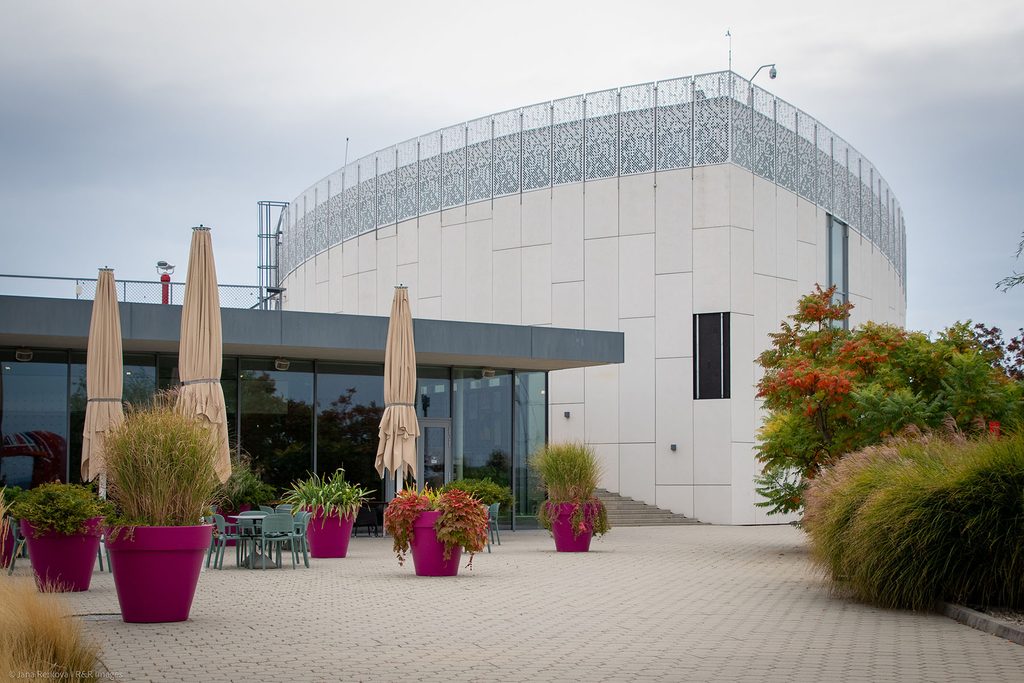
It’s the combination of modern architecture, contemporary art, a beautifully landscaped sculpture park and the idyllic setting on a narrow peninsula on the Danube that makes Danubiana such an extraordinary place.
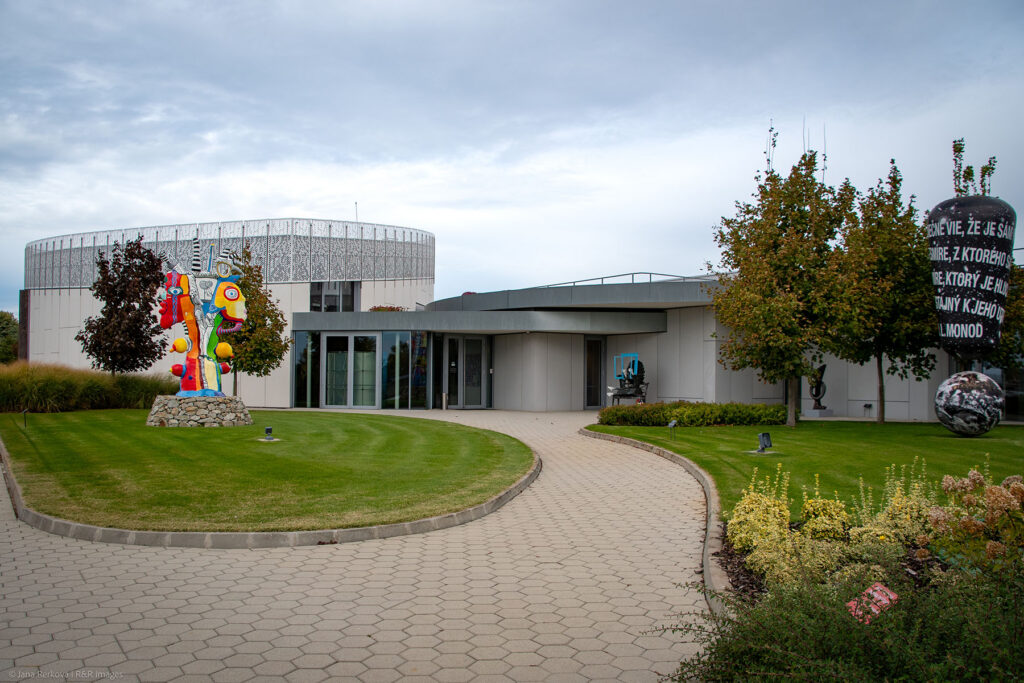
The most striking feature is the original museum building, designed by Slovak architect Peter Žalman to resemble a Roman galley – a long, narrow ship sitting in the shallows of the river.
The 2014 extension complements the original building with modern galleries stretching along the riverbank, large glass windows overlooking the water and a rooftop garden.
The sculpture park outside is probably the most Zen place in Bratislava, with beautifully landscaped lawns, large sculptures dotted throughout the grounds, walking paths and plenty of space to stop and admire the surroundings.
Then, there’s the art itself. Modern, quirky, at times puzzling and often surprising – especially for someone like me who appreciates art but doesn’t have a formal education in it or a particularly deep understanding of modern art.
Danubiana isn’t just a museum where you go to look at a few paintings and leave. The whole peninsula is part of the experience.
The story behind Danubiana
Danubiana was built on a narrow peninsula near the Čunovo waterworks, around 20 kilometres south of Bratislava. The peninsula, created during the construction of the Čunovo dam and waterworks, remained largely unused until the idea of building an art museum emerged.
The museum was the result of a collaboration between Duch art collector and patron Gerard Meulensteen and Slovak gallerist Vincent Polakovič. At a time when opportunities to see international contemporary art in Slovakia were limited, they wanted to create more than just another exhibition space. Their ambition was to bring together works by Slovak and international artists in a modern setting worthy of the art on display. Polakovič and architect Peter Žalman recognised the potential of the peninsula, with the surrounding Danube providing an extraordinary setting for a modern art museum.
Danubiana opened in September 2000, followed by a major extension in 2014, which created additional space for its permanent collection. Today, Danubiana is one of Slovakia’s most distinctive cultural attractions, exhibiting modern and contemporary art from Slovakia and around the world.
What to see and do at Danubiana
Explore the galleries
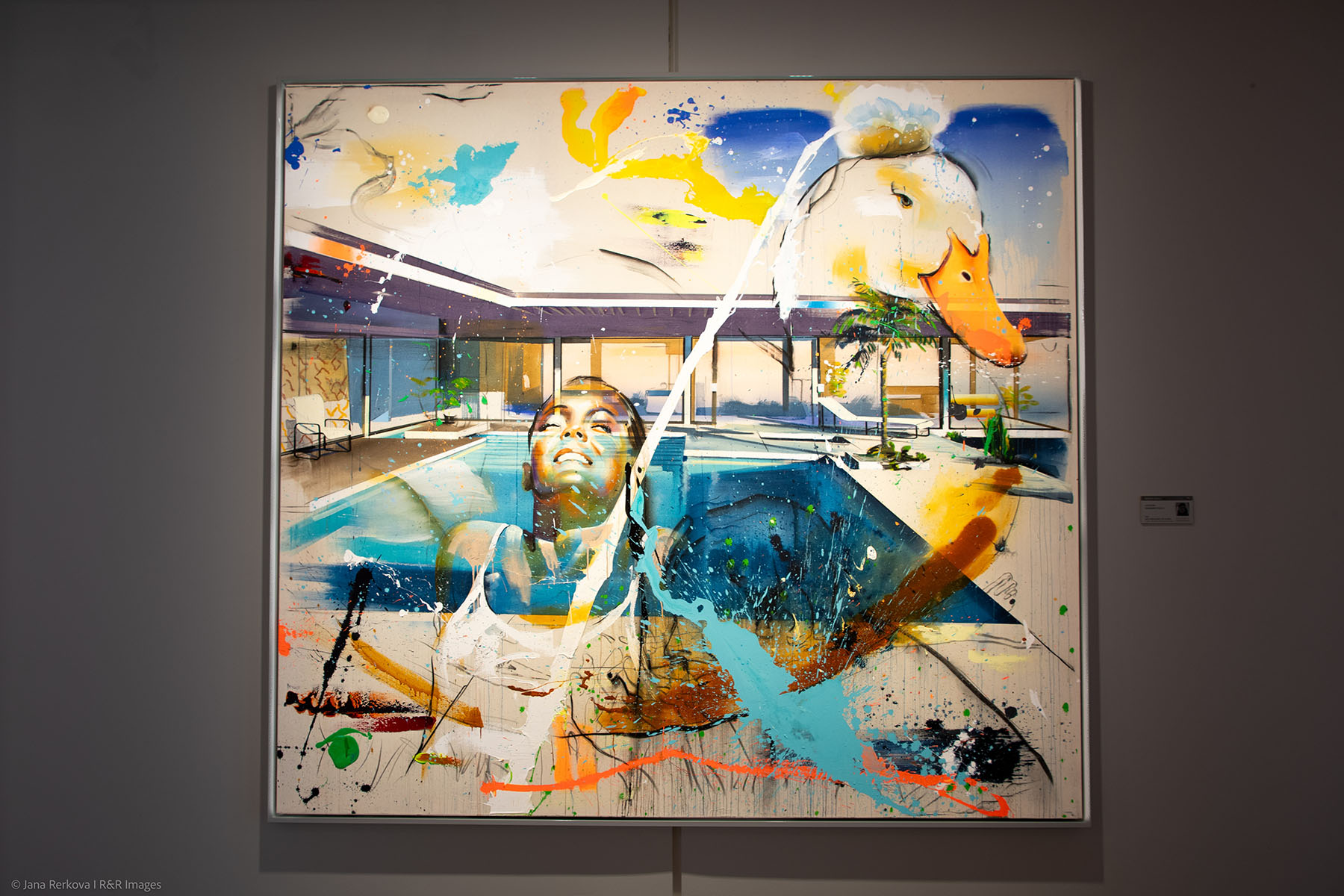
Danubiana houses collections of modern and contemporary paintings, sculptures and photography, alongside temporary exhibitions by Slovak and international artists. Artists including Joan Miró, Sam Francis, Karel Appel and Magdalena Abakanowicz have all exhibited their work here.
Works from the museum’s permanent collections are displayed on a rotating basis, while temporary exhibitions bring something new throughout the year. The galleries are spacious, with plenty of natural light and views towards the Danube, creating a perfect setting for the works on display.
Check the museum’s current exhibitions before visiting, as what you see will depend on when you go.
Stroll through the outdoor sculpture park
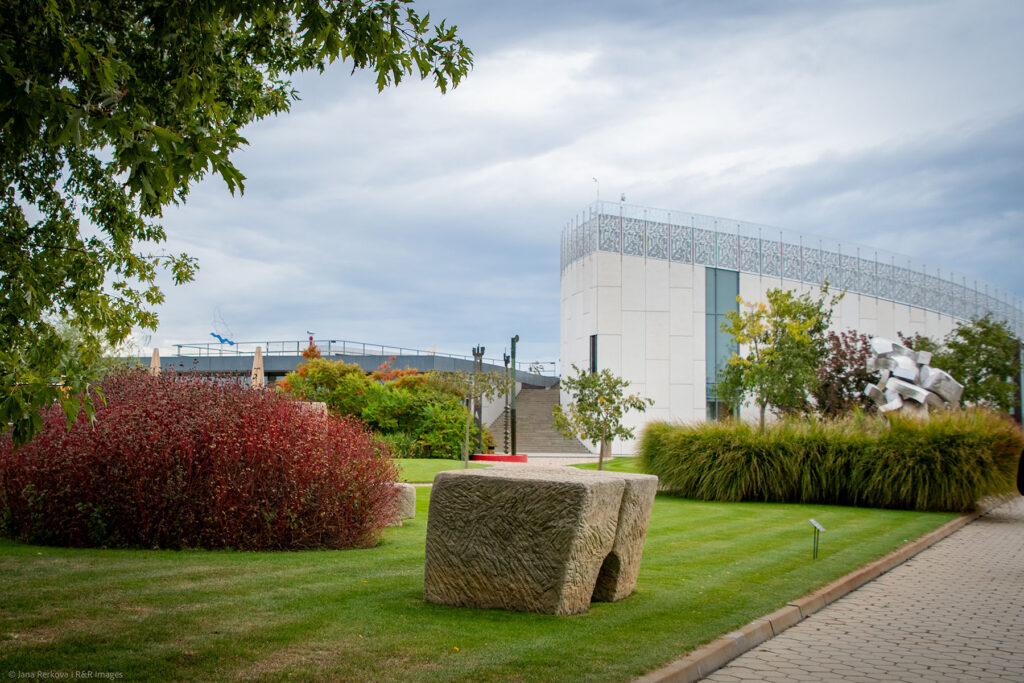
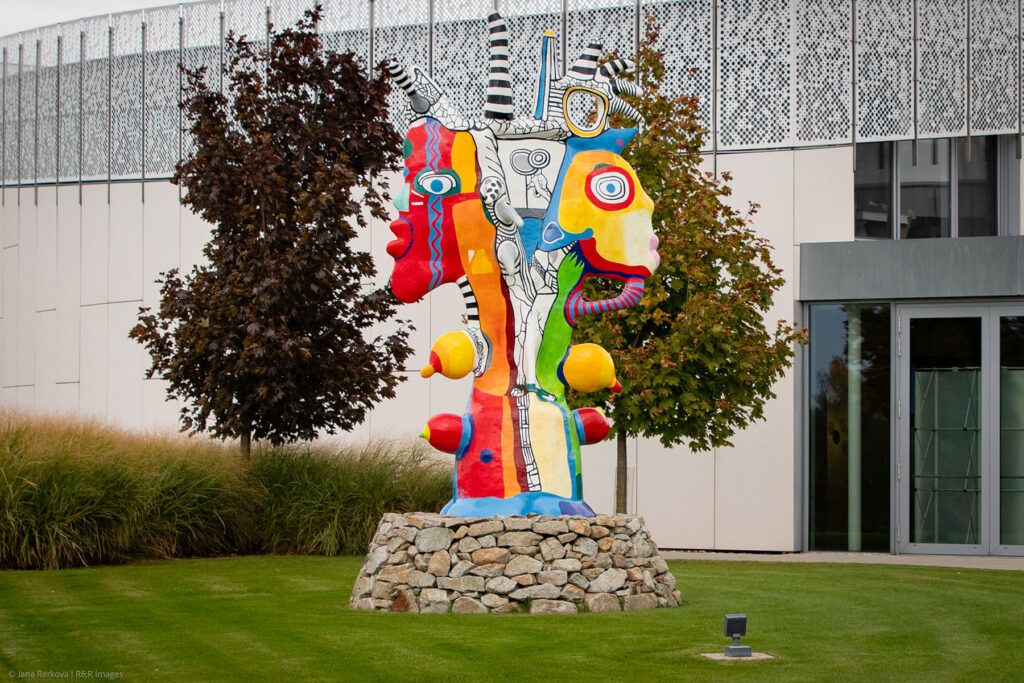
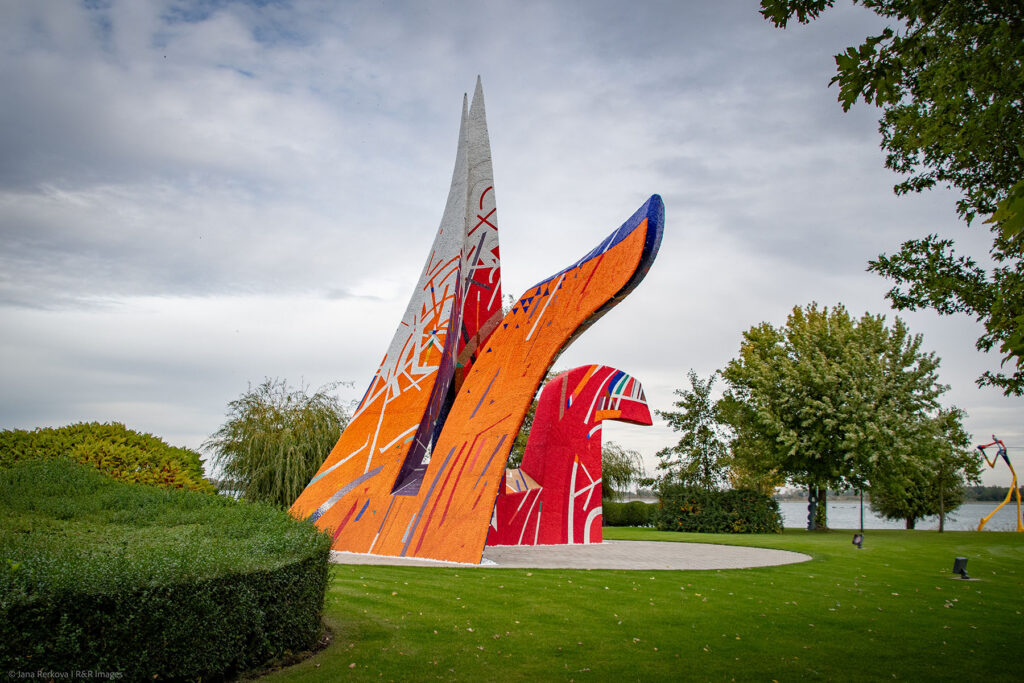
The outdoor sculpture park at Danubiana is possibly the most Zen place in Bratislava. It’s a beautifully maintained park, with lush greenery, trees, flower beds and around 60 sculptures by Slovak and internationally recognised artists dotted throughout the grounds.
Whether it’s the Golfer by the River, the striking Danube Wings or the colourful Smiling Faces, there’s plenty to catch your attention as you wander through the park. I’m sure you’ll find at least one incredible piece to call your favourite, even if modern art isn’t usually your thing.
Even better, there’s plenty of space to sit down and enjoy the views, whether you’re admiring the sculptures, the Danube or the surrounding landscape.
Walk up to the rooftop garden
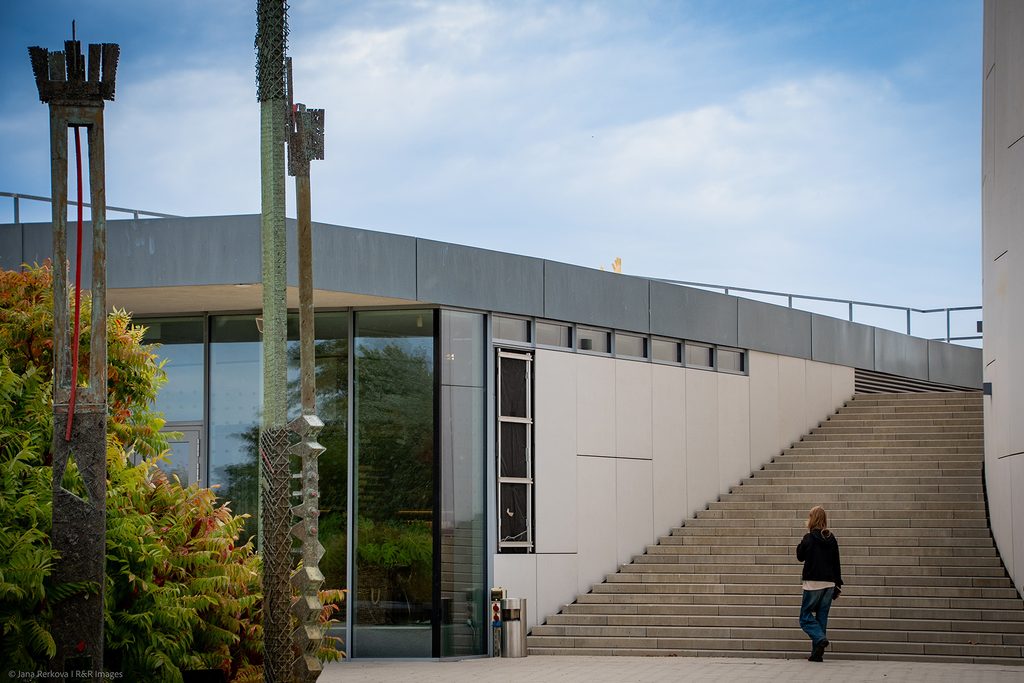
As soon as you think you’re finished exploring the indoor galleries and the sculpture park, Danubiana has another surprise up its sleeve – a rooftop garden with more great artwork and equally great views across the grounds, the Danube and the surrounding landscape.
But, here’s the thing. I only had an hour to explore, and of course I spent an unreasonable amount of time strolling through the sculpture park and taking photographs. So, I missed it. Typical.
If you’re heading there soon, leave a bit of time for the rooftop garden. And, if you manage to get there before I do, please let me know what you thought in the comments below.
Take a break at the riverside café
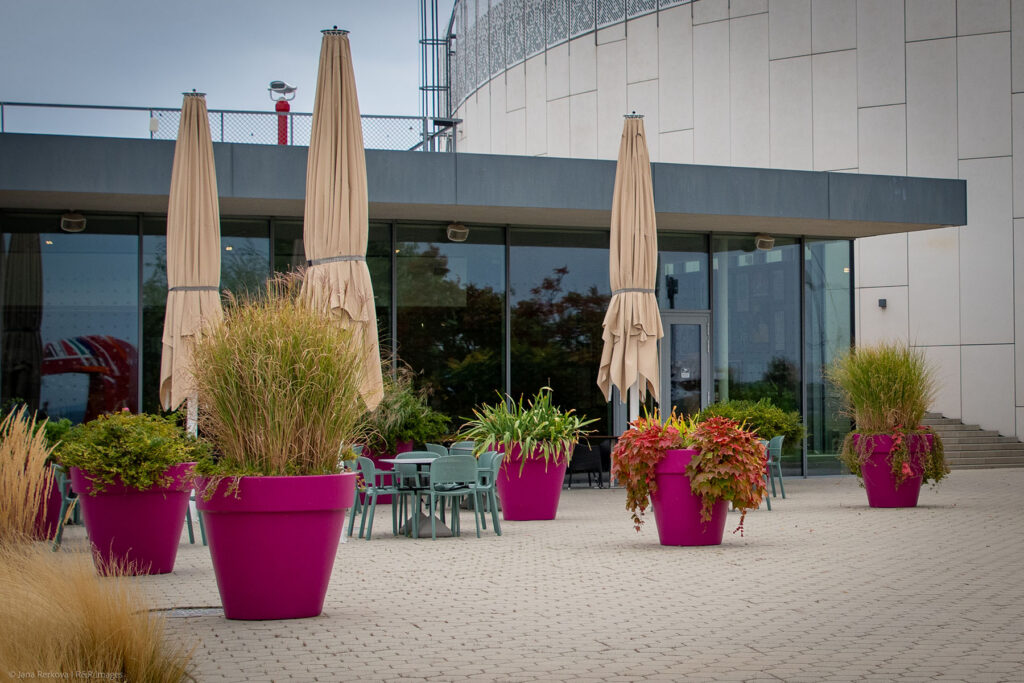
Danubiana also has a café with not one, but two outdoor terraces – one by the museum and another right beside the Danube. Depending on the weather, you can sit inside or choose one of the terraces, enjoying your favourite drink and the views of the river and sculpture park.
And just like with the rooftop garden, if you fancy a coffee or a glass of bubbly, give Danubiana more than an hour. Apparently, the views from the café and rooftop garden are particularly beautiful at sunset.
Plan your visit to Danubiana
BEST TIME TO VISIT: For a quieter experience, visit during the week. If you prefer a bit more buzz, head there at the weekend.
OPENING HOURS: Tue-Sun, 10:00-18:00. Last admission at 17.30. Closed on Mondays.
COST: Adults €12 | Students and seniors €6. Check the official website for concessions and family tickets.
How much time do you need at Danubiana?
Allow a minimum of two hours, and preferably a little longer if the weather is good. My one-hour visit was barely enough to explore the ground floor and the outdoor sculpture park. If you want to see the exhibitions properly, walk around the grounds, visit the rooftop garden, take a photo or two and stop for a coffee, I’d allow two to three hours.
And because Danubiana is outside central Bratislava, factor in the journey there and back – approximately another hour or a little more by public transport. You could leave Bratislava in the morning, arrive for the 10am opening and be back in the city around lunchtime, depending your return connection. Alternatively, visit later in the afternoon. Apparently, sunsets are particularly beautiful here.
How to get to Danubiana from Bratislava?
Danubiana is outside the city centre, but it’s surprisingly easy to reach, even without a car.
By public transport: Take bus No 90 from the Nové SND stop, near the new Slovak National Theatre building. The journey takes approximately 34 minutes, and the final stop, Danubiana is around a three-minute walk from the museum entrance. Buses run approximately hourly, so check the return timetable before you start exploring. You don’t want to finish your visit only to discover you’ve just missed the bus.
Plan your journey using imhd.sk.
By bike: If you enjoy cycling, Danubiana makes an excellent longer ride from Bratislava, although I’ve yet to try it myself. Allow around 90 minutes each way, depending on where you start and your pace.
Follow the cycling route along the Danube towards Čunovo. Near the Obrátka refreshment stand, turn towards Danubiana and follow the access road to the museum. For more information, see the detailed cycling route on Visit Bratislava.
By car: Driving is straightforward, and Danubiana provides free parking for museum visitors. There are two visitor parking areas near the entrance.
By taxi: A taxi is another option, particularly if you’re travelling with others. Danubiana has an agreed fixed rate of €26 with Easy Taxi for a one-way journey from Bratislava to the museum. Double-check the fare with Easy Taxi before booking.
Is Danubiana worth the trip from Bratislava?
Absolutely.
If you love modern and contemporary art, there’s plenty to explore inside the museum.
And, if modern art isn’t your thing, there’s the architecture, the sculpture park, the rooftop garden, the riverside walks and the café. And all of this is se on one of the most unusual and beautiful stretches of the Danube near Bratislava.
Danubiana is an extraordinary example of what can be achieved when people with a genuine passion for art, an appreciation of architecture and an understanding of the surrounding landscape come together to transform an overlooked place into something remarkable.
So, if you’re spending more than a day in Bratislava, make time for Danubiana. You don’t have to be a fan of modern art to appreciate this place.
And who knows? It might just inspire the artist in you.